
Ira Glass on “the gap”
Tuesday, February 17th
If you’re a creative, there will be a time in your life when you have to deal with this. Maybe a very long time. Maybe the rest of your life. I haven’t listened to NPR since probably the 1990s, but I have to give it to Ira Glass regarding this insight he gave during an interview more than a decade ago. This is priceless advice if you want to master your creative craft, whatever that is. There will be a time when your taste exceeds your capabilities. The only way to work through that is to up your game by creating a large volume of work that’s thoughtfully done.
Welcome to the Age of Authenticity
Wednesday, February 11th
AI-generated slop. Amazon peddling cheap Chinese goods. Tech enshitification. Increasingly homogeneous cities. Junk mail. Private equity cost-cutting. Catfishing gone wild. Culture wars. Identity theft. Bot farms. Media conglomerates controlling news narratives. Planned obsolescence in manufacturing. Instagram filters. Spam. Endlessly scrolling staged short-form videos. Government propaganda. Corporate propaganda. Political propaganda. Fake it ‘til you make it.
We’re in the middle of an authenticity crisis. For so many people, nothing feels genuine anymore. People would rather have real voices, lived experiences to which they can honestly relate and real-world storytelling than overproduced perfection. You want an edge? Don’t lose your focus on what’s authentic. Because that will be the cool springwater in this desert. Trust will replace hype. Carefully scrubbed talking points will fall to real talk. Welcome to the authenticity economy. Welcome to hand-crafted goods, actual letters in the mail, hardback books, phones-in-a-bucket board game nights and photo albums on the coffee table.
If you get lost, just go back to what’s true. Go back to you. You can’t lose. Like Denholm Elliott said to Eddie Murphy in Trading Places when he was stepping into his first day on the job: “Just be yourself, sir. Whatever happens, they can’t take that away from you.”
Critique Groups: Awesome or Awful?
Tuesday, February 10th
For the right kind of fiction writer, critique groups can be so great. You’re probably familiar with the concept: everyone brings a piece of work such as a chapter from a novel you’re writing, a bit of a short story, a poem, etc. Then everyone reads the work you brought, going around the room giving you feedback until you run from the room crying and having zero self-worth. It’s great fun. And these days tools like Teams and Zoom mean you’re not just limited to groups in your city—you can be humiliated by people from out of town as well.
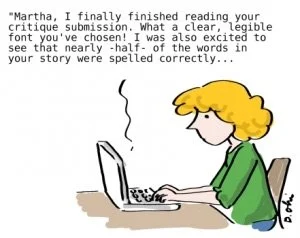
Though my demanding schedule always made my attendance shaky at best, I was in a long-running critique group for many years. The group actually has been running for about three decades, I think. It included a writer of literary fiction, a sci-fi writer and a smattering of mystery writers. Most of them were retired, so eventually I couldn’t join them at their preferred 4pm time and I fell out. But I did get a lot out of it. And I’m considering another. I’m not any less busy, so I’ve been weighing whether or not to take on another commitment like that.
If you’re thinking about starting or joining a fiction critique group, here are some pros and cons I’ve encountered over the years:
Pros:
Getting fresh eyes on your writing can catch blind spots, from typos to logic gaps and just things you wouldn’t have thought of
Accountability partners mean that you’re more likely to finish work if you’re a procrastinator
Multiple pieces of advice at once could help you get better, faster if you’re in a good group
Immediate audience reaction can be really useful; I write a lot of humor and it helps me to see what’s landing and what isn’t; sometimes I’m surprised
Different styles and genres can help you get fresh perspectives and spread your wings a bit
Potential long-term creative allies are awesome; instant people to come to your signings, blurb your books and just be there when writing feels lonely
Cons:
Bad advice can actually make your work worse, and it can be tough to decide what to ignore and what to integrate
If you’re better than everyone else (I’ve not been in this position), you’ll sometimes get less value
Writing by committee creates a mediocre product
It’s a bit of a time suck, reading others’ work and considering it thoughtfully—not to mention the meetings
It’s also like a group project; some people always put in the effort and others just don’t
Unprofessional or unstable people sometimes can’t differentiate critiques of the work from critiques of the self and that can get weird
Super Bowl Ads and the End of Commercial Copywriting
Monday, February 9th
Well it’s a Monday-after-the-Super Bowl tradition to talk about the ads. Meh. Other than the outstanding Claude campaign, there was a lot of AI slop. Which begs the question: will there even still be copywriters in five years as AI proliferates? The answer is yes. Y’all calm down. But 100% there will be fewer of them. And the mediocre ones will be the first to go.
Already there’s a whole class of basic bro marketing copy nobody asks me to do anymore: emails, brochure copy, SEO stuff, business reports, basic newsletter articles, etc. People used to ask me to do basic writing that would ensure that they just at a minimum didn’t sound unprofessional. Honestly, though, I didn’t do much of that stuff these days anyway.
Outside of that sort of thing, someone still has to have the original thoughts. Someone has to direct the creative. Someone has to know when it’s done. Claude didn’t come up with the Claude ad (though they did use AI to streamline the process). Someone still has to do the real work.
Professional fiction Writers Must Read These Three Things
Saturday, February 7th

Thomas Umstattd, Jr. has built himself a killer media brand that offers, among other things, the Author Update and Author Marketing podcasts, events, courses and more. I can’t remember where I heard him say this but somewhere out in the wild I heard this guy mention there are three types of books every writer needs to be reading:
The great books of the world
The great books of your genre
The current books of your genre
OK, you’re a literary writer and don’t write “in a genre,” you say. Fancy pants. Go read Umberto Eco or Don DeLillo or Margaret Atwood. The point still stands. It sounds silly when someone says this out loud. But this dedication to reading is something I feel like everyone does in the beginning but people often let that habit shrink over time.
Many of the successful authors I know hardly read at all anymore. They’re busy. Like, really busy. Mostly with marketing and promotion, then with new creative projects and lastly, with whatever scraps of time they have left, just trying to keep their family and lives and health in order. That’s why it’s so rude to ask them to read a manuscript for you. They probably want to help, but they’re just trying to keep the oil changed and the deadlines met.
Anyhoo, if you can swing your commitment to reading these three types of books, you’ll have a massive advantage in your writing. So keep it up. Otherwise it’s tough to know where you, and your work, stands at the end of the day.
What does writing success look like?
Friday, February 6th
Are you a writer? Who’s to say you’re not a success already? Writing is a tough business, whether you’re writing novels or screenplays or non-fiction books or even commercial copywriting work.
Consider this:
There are 342-ish million people in the United States
According to the U.S. Bureau of Labor Statistics, there are only 135,400 Americans whose primary jobs are listed as “Writer or Author,” and these include all writers from journalists to technical writers to advertising copywriters and so forth.
So .0396 percent of Americans write for a living, or about 1 in every 2,520 people. Which explains why most people don’t know many writers.
For context, 1 in 290 people practice law for a living, 1 in 410 are doctors or surgeons and 1 in 200 are engineers.
Somewhere between 10,000–20,000 people make a living as a novelist, and there are only around 11,500 professional American screenwriters. Only .000292 percent of the U.S. population has had a work of short fiction professionally published. So, hey, if you can make anything happen in this highly competitive industry, just call it a win.
There’s no one way to make it in the arts; there’s only the way you can make it. I know indie novelists who haven’t had to put on pants for 20 years and make a fine living. I know another guy who makes a full-time living writing and editing traditionally published short mystery stories—know how hard that is? It’s REALLY hard, but he’s killing it. I know commercial copywriters who can name their fee with Fortune 500 companies, more than a few traditionally published authors who saw enough success to quit their day jobs, and even people getting paid to write haikus. The money is out there.
Still, success can mean more than just making a living through your writing skills.
Sometimes success looks like a dozen different things, such as:
Doing something creative just for you
Helping make sense of the world
Helping others make sense of the world
Speaking the truths few people want to say out loud
Exploring new ideas and concepts
Working out your everyday frustrations
Solving problems on paper
Recording and preserving historic events
Influencing culture or your community
Making side hustle money for the extras in life
Enjoying a little quiet time all to yourself
Creating just for the sake of personal expression
Lastly, I can’t remember where I heard this, but it’s so, so true. Wherever you are in your writer’s journey, there’s someone who wishes they were where you are today. You look like a success to someone. Even if “where you are” is to have just had the initial courage to start trying.
On the seasons of history
Monday, February 2nd
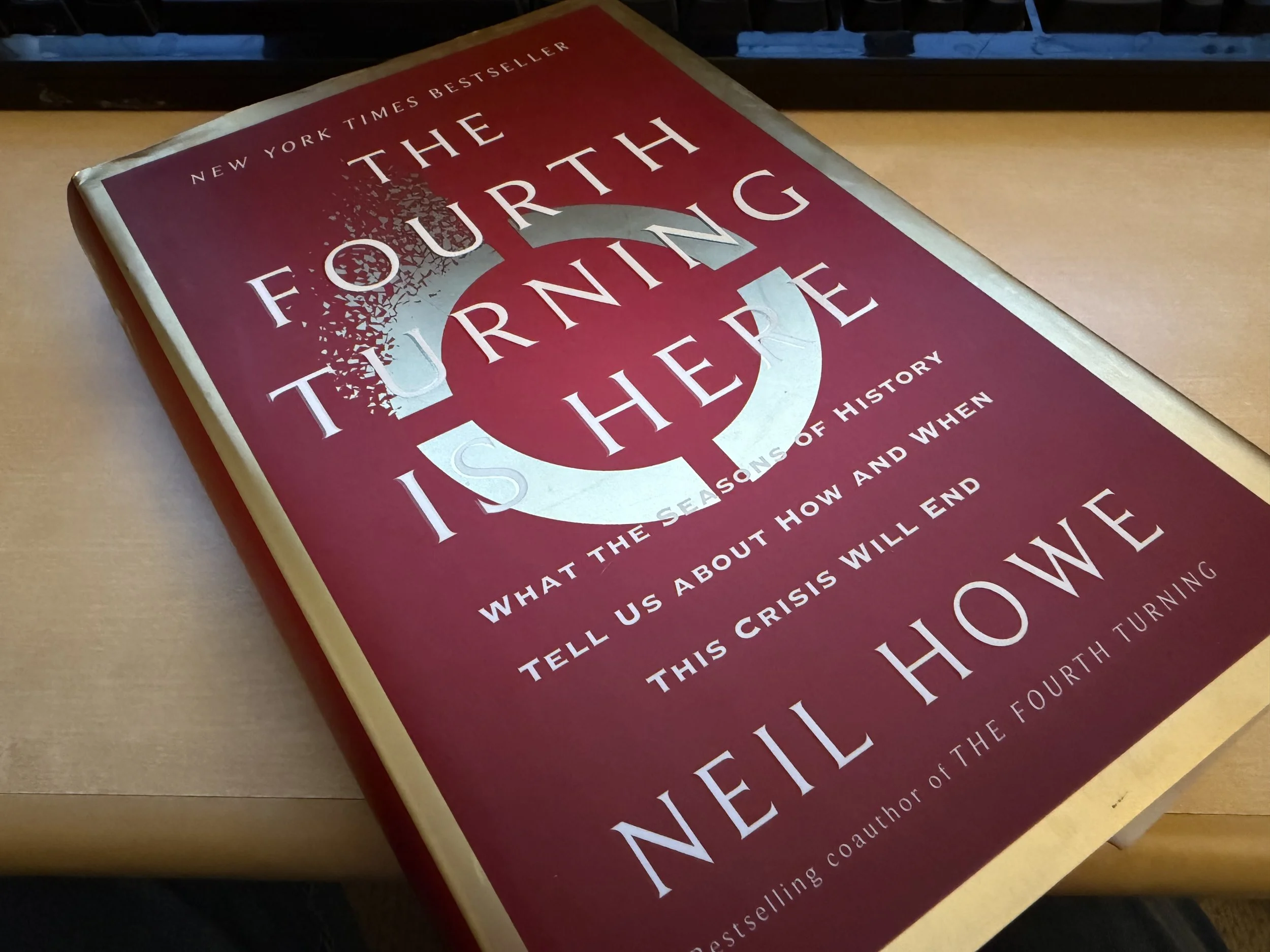
I’m trying to read a little more this year than last. My first nonfiction book of 2026 is The Fourth Turning Is Here by Neil Howe. I’m only about halfway in and it’s already worth the time.
I’ve always been a little intrigued by the prospect of seeing future trends early, though I invariably don’t make good use of any of those insights whatsoever. This book argues that American history moves in recurring generational cycles—“turnings”—and that we’ve now entered a high-stakes crisis era comparable to the Great Depression or World War II. Even though it might not feel like it.
I was a little taken aback that the book was so much about the differences between generations, which I think is really the author’s true milieu. But Howe explains how shifting values between generations drive social upheaval, institutional breakdown and eventual renewal. So he maps the economic, political and cultural pressures converging in the 2020s.
What is this new crisis and what can you do about it? Well, the the book doesn’t really give you that bit so far in my reading. Rather than predicting a single outcome, the book seems to frame today’s instability as a necessary phase of transformation, where old systems are stress-tested and a new civic order slowly takes shape. Honestly, I was pretty good with the old civic order so I’m a bit less than excited about the prospect than some.
For professional creatives—especially brand strategists, storytellers and culture-watchers—this seems like a powerful lens on why audiences feel anxious, polarized and hungry for meaning right now. It helps explain cultural mood shifts, trust in institutions and why “big moment” narratives resonate more than incremental change. If you’re shaping literary works, campaigns, content or thought leadership in turbulent times, this book gives you historical context to create work that feels timely, grounded and emotionally relevant for what people are feeling in today’s America.
Overall the book is a great acknowledgement that big changes do happen in our lifetimes and, while stressful, it doesn’t mean the end of world.
HarperCollins is a class act.
Thursday, January 29th
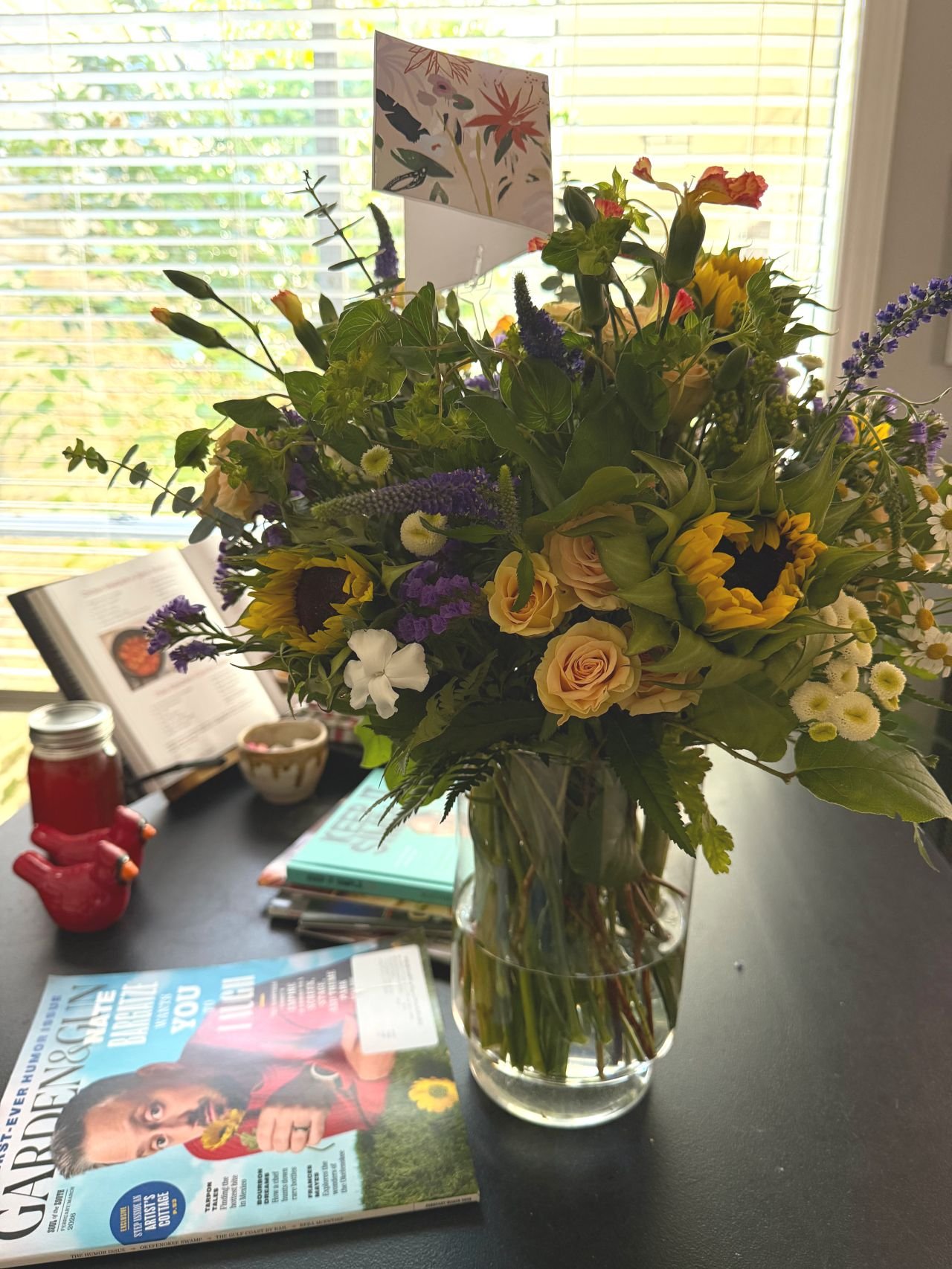
Worked with them on the re-release of my regional interest title Texas Then and Now. On pub day they sent me this beautiful bouquet of flowers! They really brightened up the room, especially since the freeze this past weekend killed so many of our big tropical flowers.
a big thank you to great day houston!
Wednesday, January 14th
It was so very kind of Deborah Duncan and her incredible team at Great Day Houston to have me on this morning and chat about my little book, Lost Treasures of Houston. Those shows always have so much ground to cover in such little time that the experience can be a little frenetic but they always do such a great job of managing the process and making it easy. And Ms. Duncan is just as smooth as Nebraska corn silk—what a professional. Hope to join them again sometime.
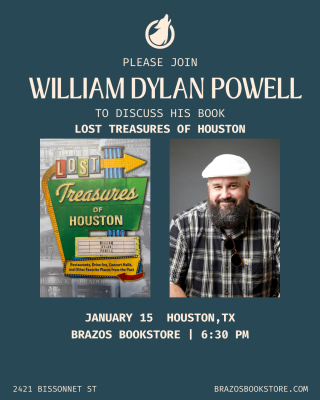
Join me at Brazos Bookstore This Thursday!
Tuesday, January 13th
I’ll be discussing my latest book, Lost Treasures of Houston. Now, I realize Salman Rushdie was just at Brazos giving a reading on Monday. So just to set expectations a bit, I have no exotic myths, magical realism or political controversy to impart. I’ll just be over here like: “Hey, anyone remember the bad ass queso at Felix Mexican Restaurant on Westheimer?” But that’s the great thing about books—there’s something for everyone.
What you can do with a journal?
Monday, January 12th
I’m a journal guy. And, I know, it’s not for everyone. But journaling has been essential to my functioning at the top end of my capabilities, such as they are. Since it’s the start of a new year I cracked open a fresh red LEUCHTTURM 1917. But what can you actually do with a journal? Probably lots of cool things I don’t know about, but I know what I do with them. Other than scribble things I need at H-E-B that I won’t be able to read later (fortunately, it’s usually tortillas so I can just guess). People see me over at the end of the table scribbling in my little notebook all day, but what am I actually doing? Probably one of these things:
Writing down little idea seeds
Half-baked ideas that are often little more than three vibes in a trench coat.I try to write down 10 new ideas a day. Usually I make it, sometimes I don’t. My brain is like a drunk opossum and this journal is like an intellectual Havahart trap.
Doing creative warm-ups
Some days I just can’t jump right into creative things; it takes a little light stretching before lifting heavy ideas. Just doing a warm-up whereby I blow out the mental carbon deposits on something that doesn’t matter helps me get in the zone.
Observing or eavesdropping
The way two people interact. The glint of light off of a skyscraper at sunset. How the Spanish moss hangs off of the live oaks down by the bayou near my house. A lot of times I just write things down that tickle my fancy. Also if you say something fun, interesting or crazy in public and I am anywhere nearby I will be writing it down.
Drafting character and story sketches
This is where imaginary weirdos become fictional characters and characters become future revenue streams. Or, more likely, a bit of recycled paper. Sometimes its pages and pages of what-if and other times it’s just something vague like “a Pawn Shop meets the Equalizer.”
Writing a list of things to do
I know. Bo-ring. But to write something down, in ink, is to commit. Yes, I have all the apps. But those are too easy to change. Plus they’re scattered over the interwebs. This thing is always with me, staring me in the face and telling me I suck if I don’t get these things done today.
Capturing moments in real time
Not the Instagram version. The gritty, for-real, sometimes-life-sucks version. The smell of mold as I help muck out my grandparents’ home after Hurricane Ike, how I feel when I’ve lost someone or savoring one of life’s big wins. Even when you try to be authentic, socials are curated; here I’m gunning for straight-up slices of life.
Recording trends I notice
Cultural patterns. Work patterns. Personal patterns. “Why am I tired every Saturday afternoon?” “Why do today’s Taco Bells look like a tax prep office in suburban Albuquerque?” “Why do people under 30 wear hoodies and denim jackets during a Southern summer?” I don’t have the answers but I write down the questions.
Recording things I do
I mean, this makes me sort of feel like an eighth grade girl on the one hand. But they’re usually not so much “dear diary” moments as evidence that I actually did things on any given day. Or didn’t. This helps me stay accountable, even just to myself. It hurts to write: “Slept late, did not write this morning.”
Writing Morning Pages
Three pages. No editing. No rereading. Just dump the brain. It’s like emotional pressure-washing. You don’t keep the water; you just enjoy the fact that the grime is gone. Wasn’t my idea, I stole it from The Artist’s Way by Julia Cameron. Which I highly recommend.
Doodling
No, seriously, like a school kid with skulls and ninjas and patterns and cartoon ducks. Because sometimes the hand knows things the brain hasn’t admitted yet. Also my brain requires a sort of minimum level of stimulation and if I don’t get it this is one result of me going into stand-by mode.
Helping with decision-making
Write the options. Write the pros and cons. The fears. The upside. The worst-case scenario, which is almost never as bad as your brain insists at 2 a.m. Decisions seem more manageable when trapped on paper.
Some of these things I do more than the others. Most days it’s just new ideas and writing down what I do that day, and probably a little doodling. But I try to mix things up. I try not to think about the notebook as a thing to keep nice or through which I try to be impressive or pretentious. I try to keep it more of a squeegee I can use to wipe the residue from my brain so I can forget things safely and move on with my life. Now if you’ll excuse me, I have a brand-new red notebook to ruin with my terrible handwriting.
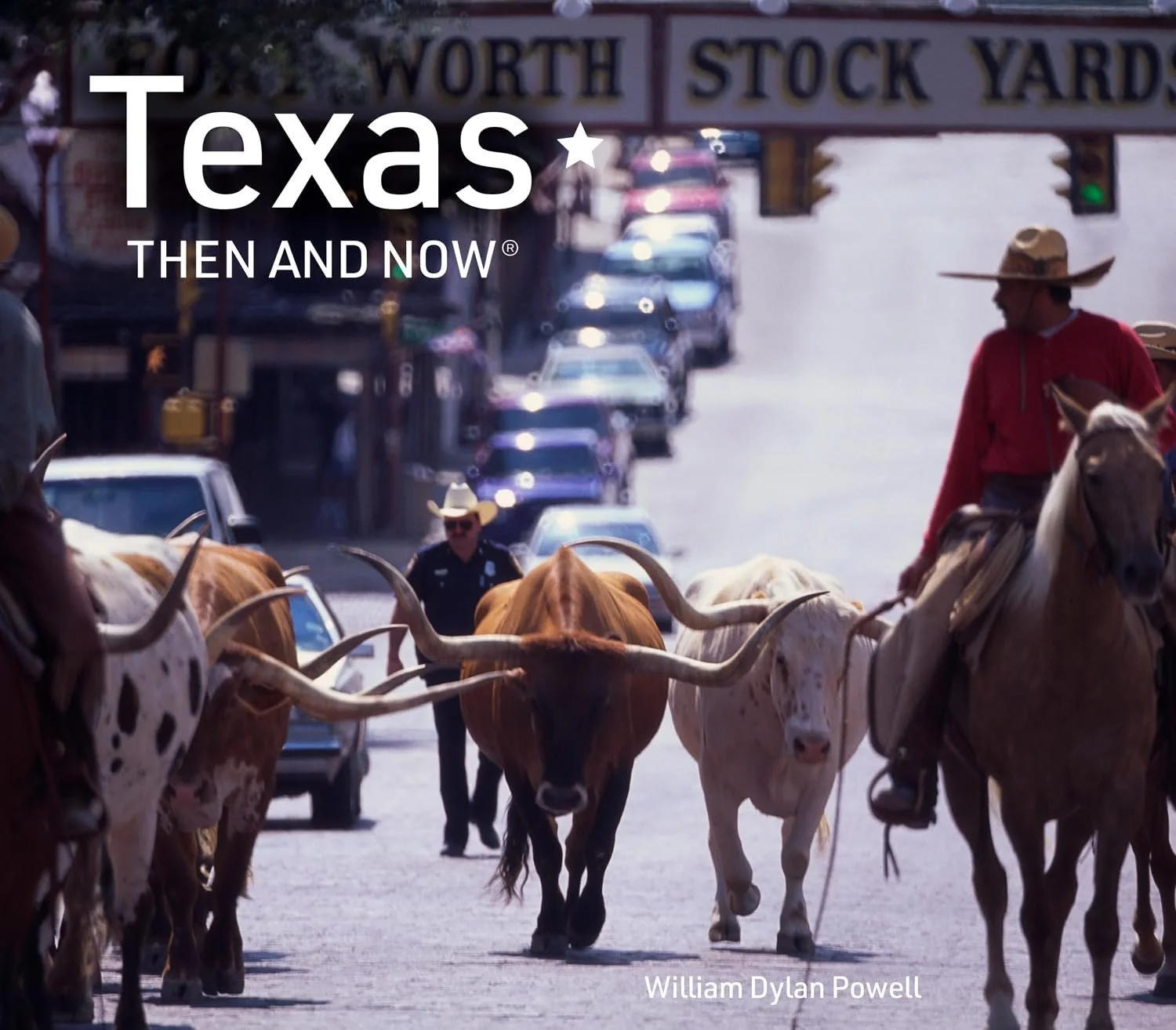
Join me at Blue Willow Bookshop Saturday, February 11th
Sunday, January 11th
With everything else going on I hadn’t talked much about an exciting new release I’ve had in the works with Pavilion Books. The publisher is re-releasing a new version of my 2013 title Texas Then and Now—with new spreads now covering updated cities across Texas. In the 13 years since this book was released the state has seen a lot of change. Austin, in particular, has had a total, as the kids say, glow-up, in recent years. And the charming Blue Willow Bookshop is a great place to hear all about the project. See you there!
“Addictive and Dangerous”
Saturday, January 10th
Though I’ve never read one of Hilary Layne’s books, I really like her YouTube channel, The Second Story. It’s really for writers of fiction but this episode touched on something that’s impacting creatives of all kinds. As a professional writer of almost 30 years it’s been really interesting to see the many ways my fellow scribblers have reacted to LLMs and other AI tools. They’ve ranged from one person having a severe allergic reaction to any use of AI whatsoever to this technology becoming another person’s entire personality. But give this a watch. I think Layne brings up a good point: There is no free lunch. Like so many other things in life, the ability to write is a perishable skill. Outsourcing any part of the creative process will ultimately have a negative impact on your brain and the quality of what you create. Do the work. Do it yourself. Don’t outsource this wonderful talent you’ve been given to a bunch of dorks in Silicon Valley. People don’t write because it’s easy. They write because it’s hard. Write your own fiction. Write your own social content. Write your own love letters and grocery lists and work emails and letters of complaint. FFS, y’all.
Thank you, Hello Houston!
Friday, January 9th
Just a quick note to say how much I appreciate the hosts and crew at Hello Houston for chatting with me about my little nostalgia book, Lost Treasures of Houston. They are a LOT of fun to hang with, and that always makes for a good jam session. Also chilling in the green room listening to the show I thought all of the guests were interesting, so I’ve started listening more regularly now. I question whether or not it’s worth the investment in watching national news, especially given my blood pressure, but there’s a pretty good case for staying plugged in at the local level. I’m at about minute 48.
We saw a meteor!
Thursday, January 8th
Driving from Houston the Hill Country. The dash cam didn’t really catch it all that well so you have to look in the distance amongst the street lights. Apparently it’s the tail end of the Ursid meteor shower, which at its height presents around 5–10 per hour, but it peaked a few weeks ago. The Ursids get their name from Ursid Minor (little bear), the constellation from which they appear to radiate, though apparently they’re actually debris from the comet 8P/Tuttle.
Thank you, cactus music!
Wednesday, January 7th
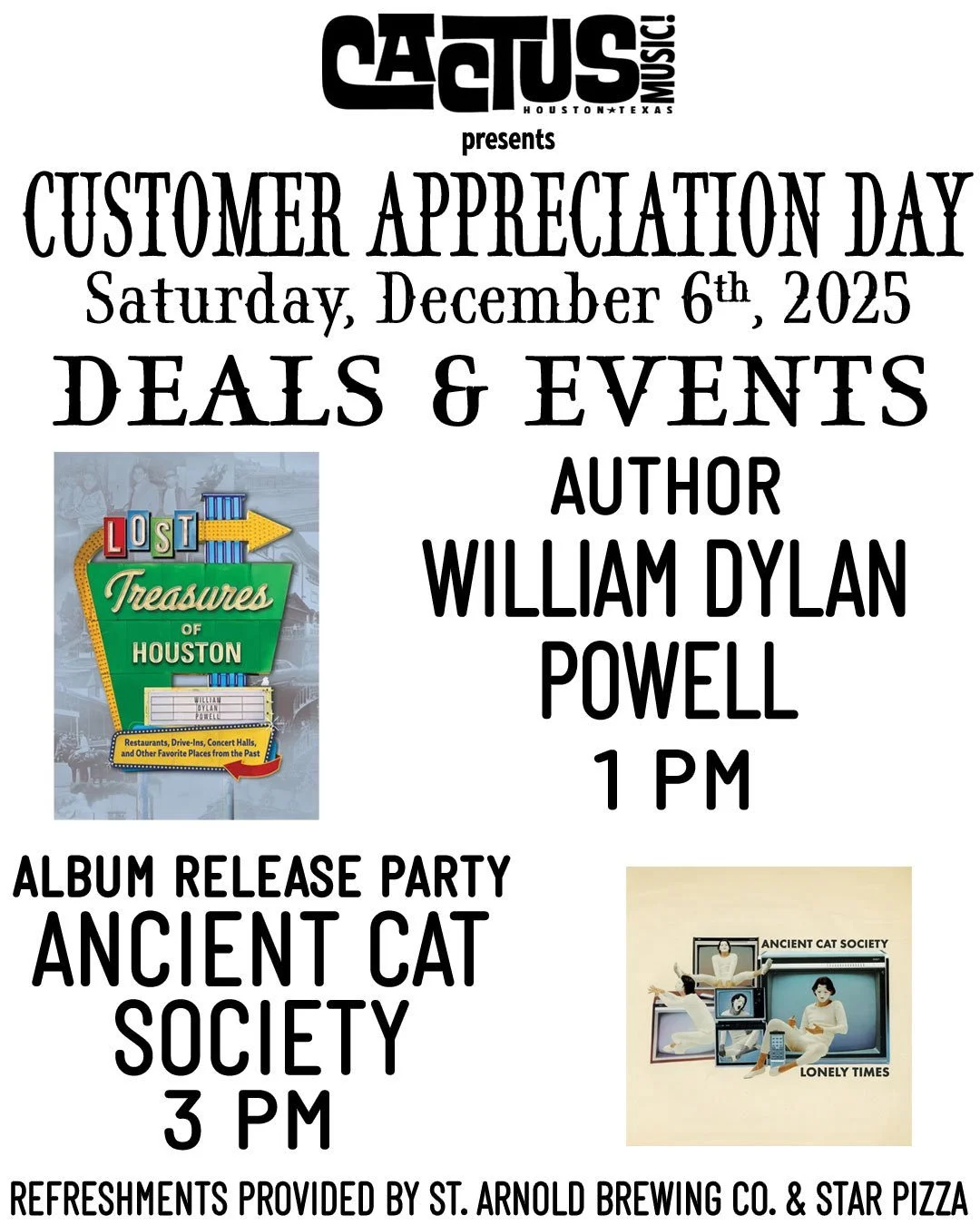
Big thanks to Quinn and the gang at the landmark Houston cultural icon Cactus Music for having me in for their customer appreciation day last month. They are just the coolest crowd ever. And the band they had that afternoon, Ancient Cat Society, was really good too! Plus I got to say hi to the adorable shop pooch. I gave a talk and signing for Lost Treasures of Houston, saw some old friends, met some new friends and even met one of the contributors of photography for the book in real life who turned out to be a super-cool guy. This book is about lost treasures, but Cactus Music is one of those still around treasures you can enjoy today so if you’re a music fan get over there and poke around a bit. You won’t regret it.
Smog makes for a lovely sunset
Tuesday, January 6th
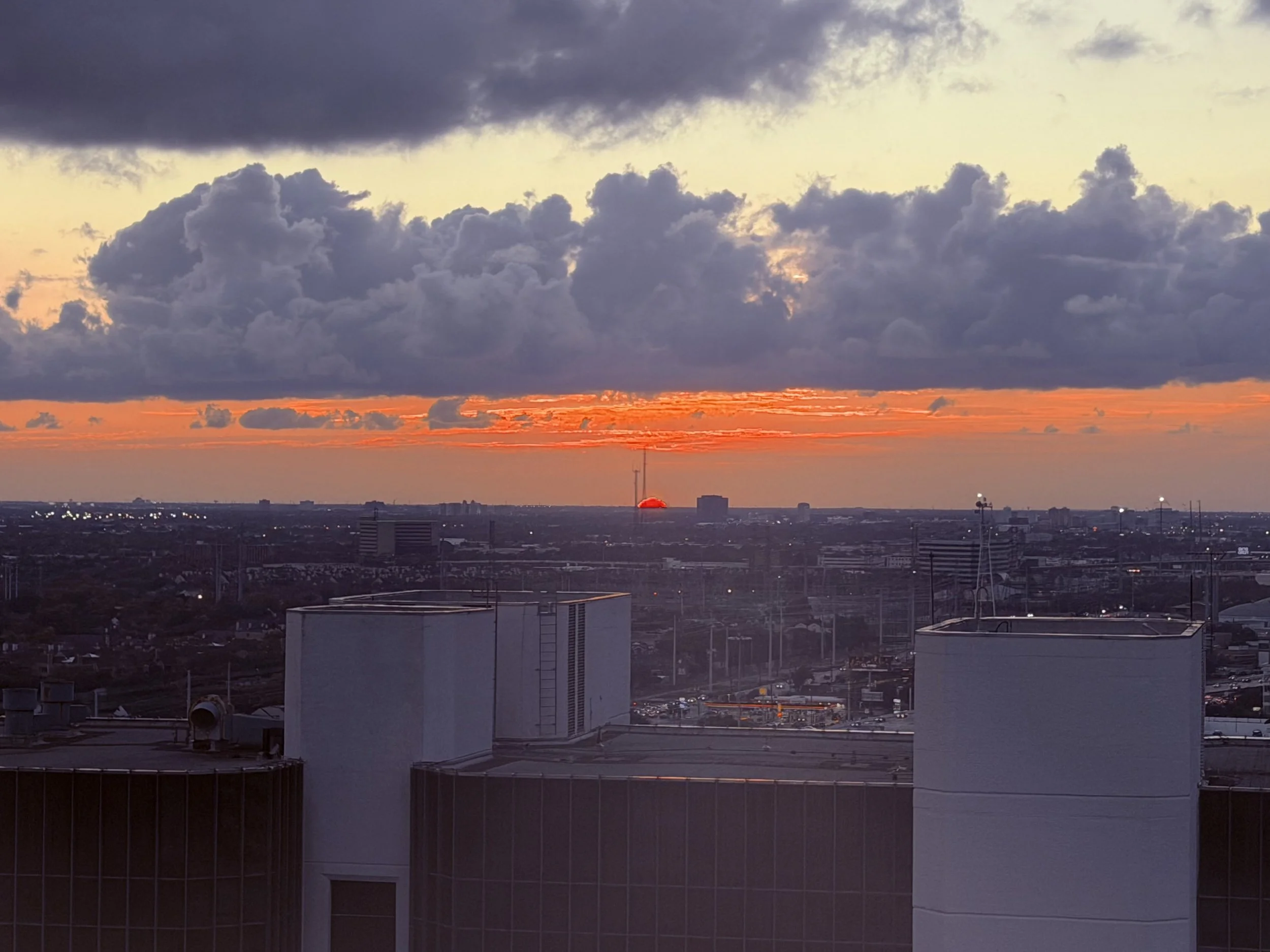
Well, smog and a bit of cloud cover. Smog actually makes tiny particles of pollution like ozone byproducts, sulfates, dust and whatever other mystery stuff we make out in the Ship Channel scatter blue light—letting reds, oranges and pinks dominate. At sunset, sunlight travels farther through the atmosphere, amplifying this effect. And in really humid Southern cities like Houston and Atlanta the smog and moisture act like a big old diffuser—creating these super-dramatic colors. I mean, the air quality isn’t awesome but, you know, it is beautiful if I do say so myself. Taken at Greenway Plaza.
Interruptions are the Worst
Friday, October 3rd
You’re finally writing and it’s all coming together and the universe is bestowing its creative riches onto you most generously—then BOOM. Interruption. The door. Your phone. Your significant other. Whatever the cause, something is now broken. Lost. All of those amazing words and ideas have now slipped beyond your reach.
According to research by Dr. Gloria Mark, a professor of informatics at UC Irvine, it takes an average of 23 minutes and 15 seconds to regain focus after being interrupted. Apparently creative writing relies on working memory—your brain’s infrastructure for holding thoughts, considering sentence structure, choosing words and the like. Interruptions wipe working memory. So when you can swing it, try to head off interruptions before they happen and preserve that precious working memory. Here are some tips:
1. Silence Notifications
Turn off alerts on your phone, email, and chat apps. Even small pings can break concentration and cost you minutes of recovery time. Better yet, leave that noise box in another room.
2. Set “Do Not Disturb” Hours
Block writing hours on your calendar so friends, family and colleagues know you’re unavailable.

3. Use Noise-Canceling Headphones
Even if you’re not listening to music, wearing them signals “focus mode” and blocks ambient distractions. Sometimes I actually wear earplugs and noise-canceling headphones at the same time.
4. Choose a Dedicated Writing Place
Designate a physical spot where you only write. Your brain starts associating that space with focus and flow. It’s OK if you don’t have a fancy home office; it can be a lawn chair, a park bench, a nearby coffee shop—just a place where you do your thing.
5. Communicate Boundaries WITHOUT Using an Axe
Tell people you’re writing and when you’ll be done. A clear, friendly heads-up prevents well-meaning interruptions. If that fails, a less friendly one usually makes your point, but no need to get all Shining on everyone. A closed door, a “writing in progress” sign or other signal can head off a potential disruption. Remember, if you scream at people for interrupting you all the time it’s possible that eventually you won’t have anyone left to write about!
6. Write Early or Late
Schedule writing during hours when interruptions are least likely—before the world wakes up or after it quiets down. One reason I write at 4:30am or 5:00am is that it’s a time of day at which people are the least likely to be asking me for anything.
7. Tidy Your Workspace (Maybe)
For some people, visual clutter can pull attention away. Clear desk, clear mind and all that. Other people find a messy office cozy and productive. I actually find my office being TOO NEAT can be a little distracting.
Fall Harvest Chex Mix
Thursday, October 2nd
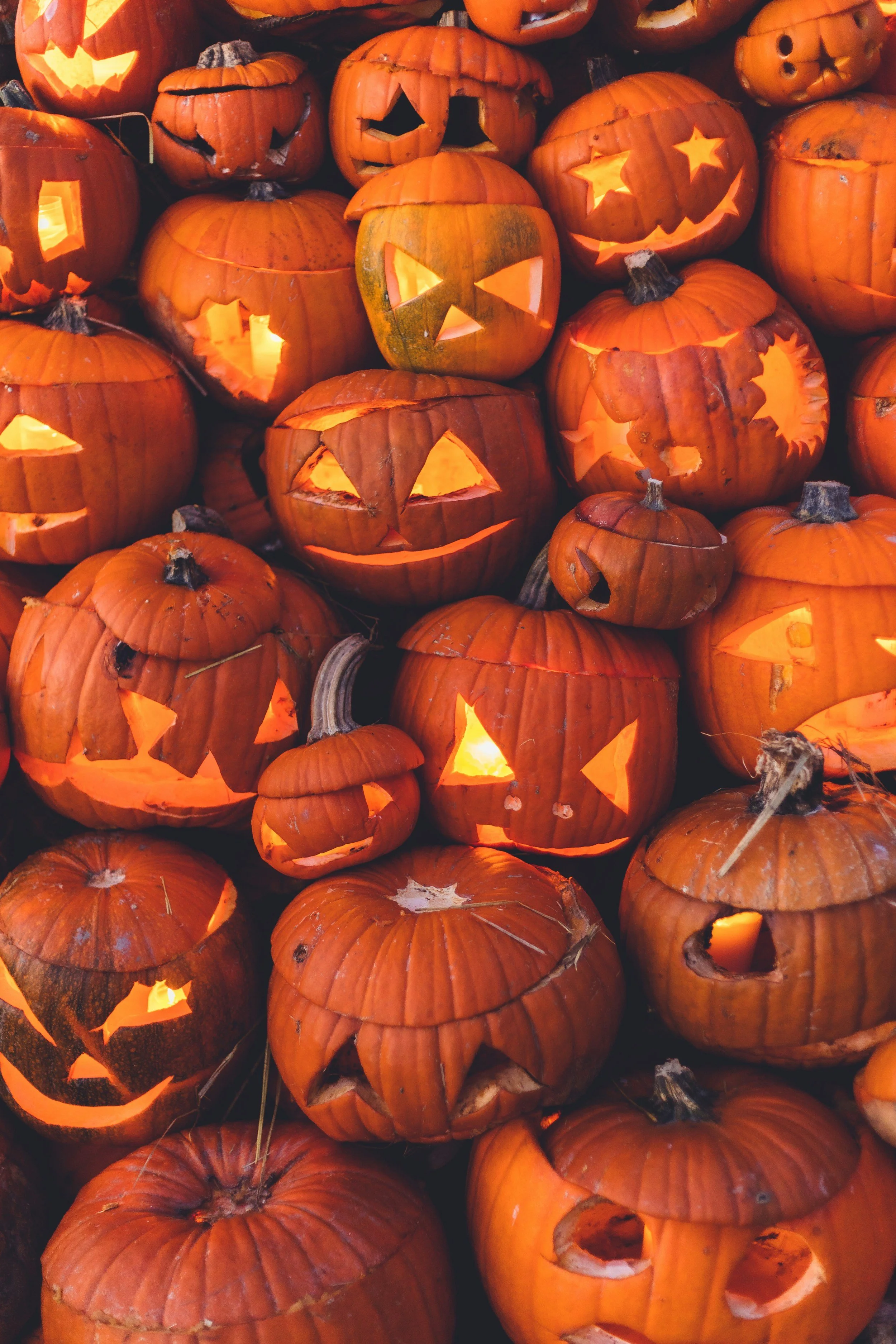
I make a big batch of this stuff every Halloween. Honestly, nobody really likes it but me. Most people think it’s just too sugary. But if you too dig a combination of sweet and salty stuff while you’re watching a scary movie or a football game here’s the recipe:
Ingredients
4 cups Rice Chex cereal
4 cups Corn Chex cereal
2 cups mini pretzels twists
2 cups Bugles
1 cup roasted pecans
½ cup butter (1 stick), melted
¼ cup brown sugar
2 tsp cinnamon
1 tsp vanilla extract
1 cup candy corn
1 cup of those little candy corn pumpkins
1 cup M&M’s Harvest Mix
1 cup Reece’s Pieces
Directions
Preheat oven to 275°F (135°C). Line a large baking sheet with parchment paper.
In a large bowl, combine Rice Chex, Corn Chex, pretzels, Bugles, and nuts.
In a microwave-safe bowl, melt the butter. Stir in brown sugar, cinnamon, and vanilla until smooth.
Pour the butter mixture over the cereal mixture. Toss gently to coat everything evenly.
Spread mixture evenly on the prepared baking sheet. Bake for 45 minutes, stirring every 15 minutes.
Once cool, stir in candy corn, the little pumpkins, M&M’s, and Reece’s pieces.
Keep in an airtight container for up to 1 week. It will take every bit of a week to eat.
Mr. Bones Hits the Breakfast Table Every October
Thursday, October 2nd
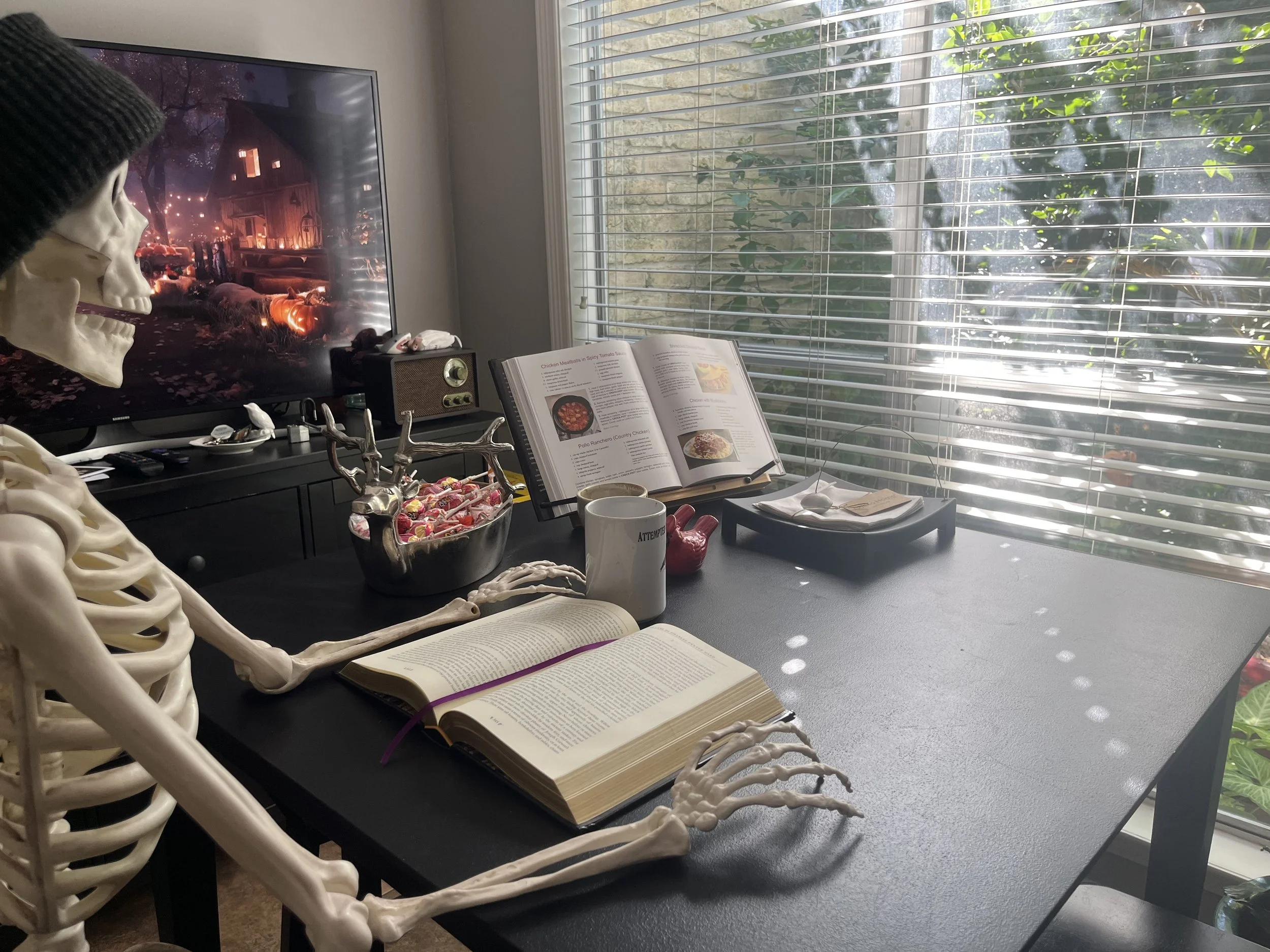
Why, you ask, would people with no kids decorate their house for Halloween every year? Eh, I don’t know. Part nostalgia, part seasonal ritual, part we just like doing fun things and never really grew up. Plus, that space opens up to our atrium in the front so the kids can see Mr. Bones when they come to the door trick-or-treating.

Coming soon!
Wednesday, October 1st
Remember Marvin Zindler’s restaurant report? Sweaty summers at AstroWorld? The Shamrock Hotel? Nights involving questionable decisions at Power Tools, Post Oak Ranch or all those places on the Richmond Strip like the Yucatan Liquor Stand?
Well you’re in luck because my new book, which drops around Thanksgiving, is for you.
Lost Treasures of Houston from Reedy Press drops just in time for the holidays—a hardcover packed with 200+ photos and stories of the Bayou City’s beloved-but-bygone people, places and phenomena.
Going to have a launch party in early December, details forthcoming.
Hey I wrote another novella!
Tuesday, September 30th

Down & Out Books is a bold, independent publisher bringing readers the very best in gritty crime, mystery, and noir fiction. Since 2011, they’ve carved out a reputation as a home for fearless storytellers who thrive on the edge of the genre—publishing novels, novellas, and short story collections that grab you from page one and don’t let go. Latest case in point: The Chop Shop series. Created and edited by Michael Bracken, this serialized anthology tells the seedy, speedy tales of a Dallas chop shop and its cast of characters through the novellas of a dozen different authors.
My own contribution was called The Hellcat. I’ve been too busy with my book coming out in November to give it the love it deserves, but I’m just now circling back to it (it was published earlier this year). In The Hellcat, a down-on-his-luck former golf caddy helps steal a Dodge Challenger Hellcat—hoping for money to move out of his parents’ house. That sweet ride, however, featured more than just a supercharged HEMI, leather seats and flared fenders. It also contained Lady Mousehole, the meanest house cat in all of Texas. Meaner, almost, than her owner, Dallas Cowboys offensive lineman Braun “The Beast” Keller. Sure, he got the car. But can he get out with his life?
Even though the story’s called The Hellcat, you might wonder why there’s a Trans Am on the cover. Glad you asked. Thing is, this is a whole volume of stories and each one has a distinctive ride on the cover. In fact, if you really want a summer joyride challenge yourself to fire up each episode:
The Cadillac Job by Stacy Woodson
A Hunka Hunka Burning Rubber by Hugh Lessig
Run and Gun by Joseph S. Walker
Barracuda Backfire by Tom Milani
Devil in the Rearview by Stephen D. Rogers
Here Comes the Judge by James A. Hearn
Billy Dinkin’s Lincoln by John M. Floyd
Slow Ride by Mark Thielman
Coyote Run by Michael Bracken
Fast Cars and Dirty Diapers by Adam Meyer
Loose Change from a Mini Cooper by Frank Zafiro
Faster Than a Speeding Bullitt Mustang by Chuck Brownman
Now go make sure your car is parked where you left it, especially if you live in Houston.
Every day I try to come up with 10 new ideas.
Monday, September 29th
They can be story ideas for the fiction I write. They can be new book ideas. They can be ideas for my clients at work. They can even be bad ideas. But it’s amazing how much that habit has given me over the years. Generating 10 new ideas every day—as James Altucher recommends—trains you to strengthen your creative capabilities, push past mental ruts, and build a constant flow of original concepts ready for future projects. Brainstorming is a muscle and if you don’t use it, that muscle will atrophy. I’ve felt this myself because if I skip a day, or just phone it in with a couple of ideas per day, the practice gets more difficult.
Mixed martial artist Miesha Tate recently had James Altucher on her podcast. I’d never heard of Miesha Tate but I wanted to share Altucher talking about his habit of coming up with 10 ideas per day in his own voice and with his own story. I’ve recommended this habit to many people and almost nobody actually does it because it’s tough. But those who do rarely regret it.

If we don’t make time for lazy sundays, the terrorists have won.
Sunday, September 28th
No 5:00 am writing today. No meetings. Nothing involving math or money. Just sunshine. Going for a long walk in the park next to my house. Might put on our daily scary movie for the Halloween season and immediately fall asleep. Definitely firing up the grill. Will probably do a little reading. I’m into The Best Mystery Stories of the Year 2024, Otto Penzler’s series anthology. This one is edited by the esteemed Anthony Horowitz. I’m in the middle of the short Lovely and Useless Things by Nils Gilbertson, which is really good. Also, looking at this photo, it’s hard to know where my hairy arms stop and the dog starts.
So I’ve had my new generator ready to go.
Saturday, September 27th
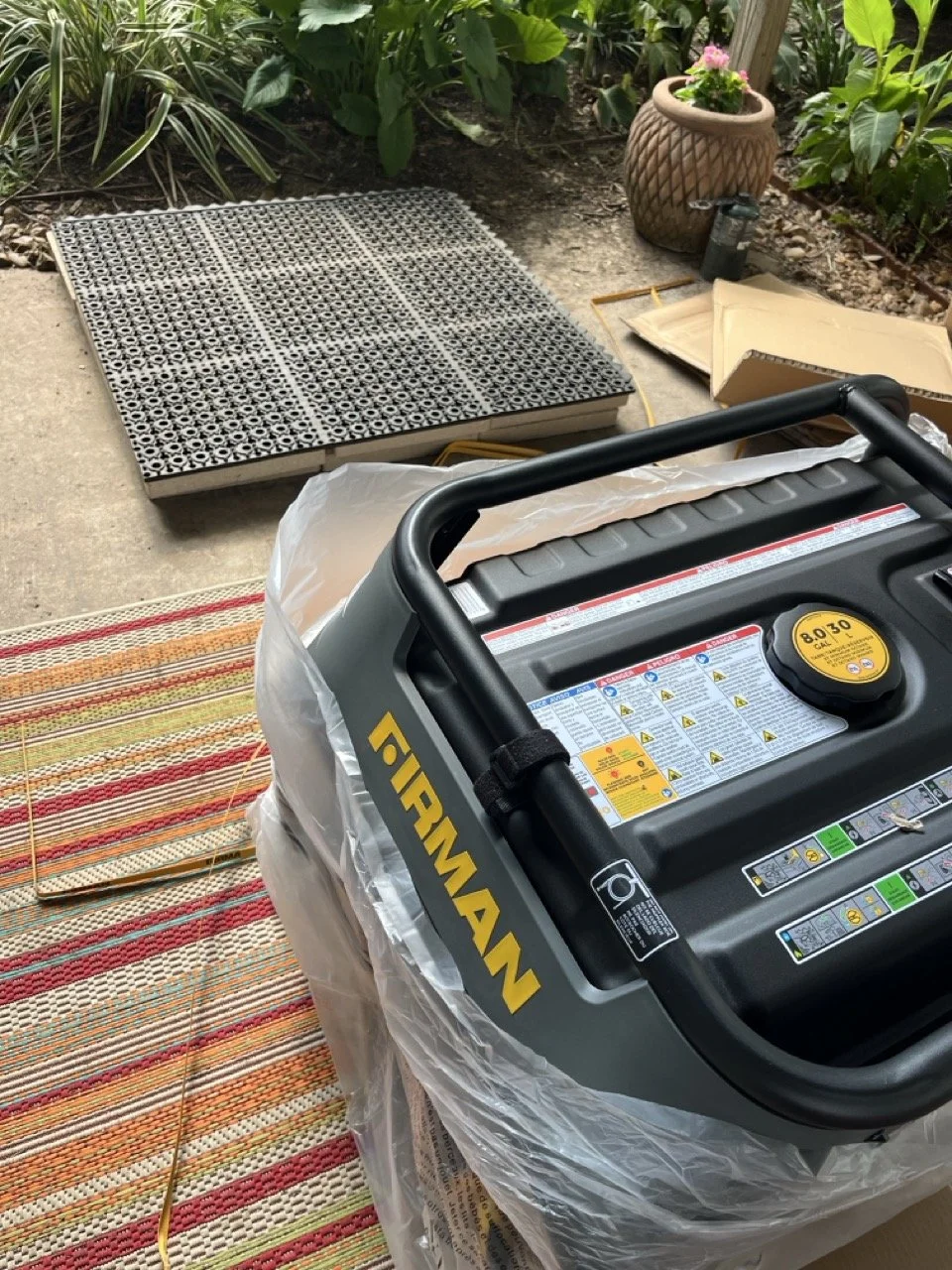
I’ve been diligently testing this generator monthly. I picked up plenty of oil and air filters, spark plugs and other spare parts. And THAT is the reason why Houston didn’t get hit with a hurricane this season. You’re welcome.
Leuchtturm1917: There is no substitute.
Friday, September 26th
Leuchtturm1917 notebooks are, without exaggeration, the greatest notebooks on Earth.

I mean, I’ve been a professional writer for years so I’ve scribbled ideas on everything from Whataburger receipts to legal pads, computer paper and schoolboy notebooks. At one level, it doesn’t matter. But, on the other hand, I am a professional writer (though exactly how professional I am depends on who you ask). And a quality notebook turns writing from a chore into a ritual, helping treat my ideas with the same care and permanence they deserve. I mean, things do actually go from my notebook to the free market on occasion. Over the years, for me, the Leuchtturm1917 is as good as notebooks get.
The paper feels perfect—smooth enough for fountain pens, sturdy enough for scribbles. The option to get dotted, blank or lined pages lets you strike just the right balance of structure and freedom. The lay-flat binding makes every page easy to use, and the two built-in bookmarks are handy. There’s even a pocket in the back which I use to keep notes I scribbled when away from the notebooks.
I’ve filled dozens over the years, and they hold up beautifully: no bleeding, no fraying, just pages full of ideas. Thursday I was at lunch at Kata Robata and spilled a whole glass of water on one—you’d never know it. I use them to track how I spent the time for the day, write my James Altucher 10 daily ideas, doodle, scribble random notes about the day, write down things I need to do, scratch out character sketches or overheard conversations.
Sometimes I go back and flip through my old one and gawk at the horrible ideas that are gladly still contained therein and not out in the world. But I wouldn’t entrust my horrible ideas to any other notebook.
Calm down, COSTCO.
Thursday, September 25th
It’s still September. It’s 90 f’ng degrees outside. Damn, y’all.
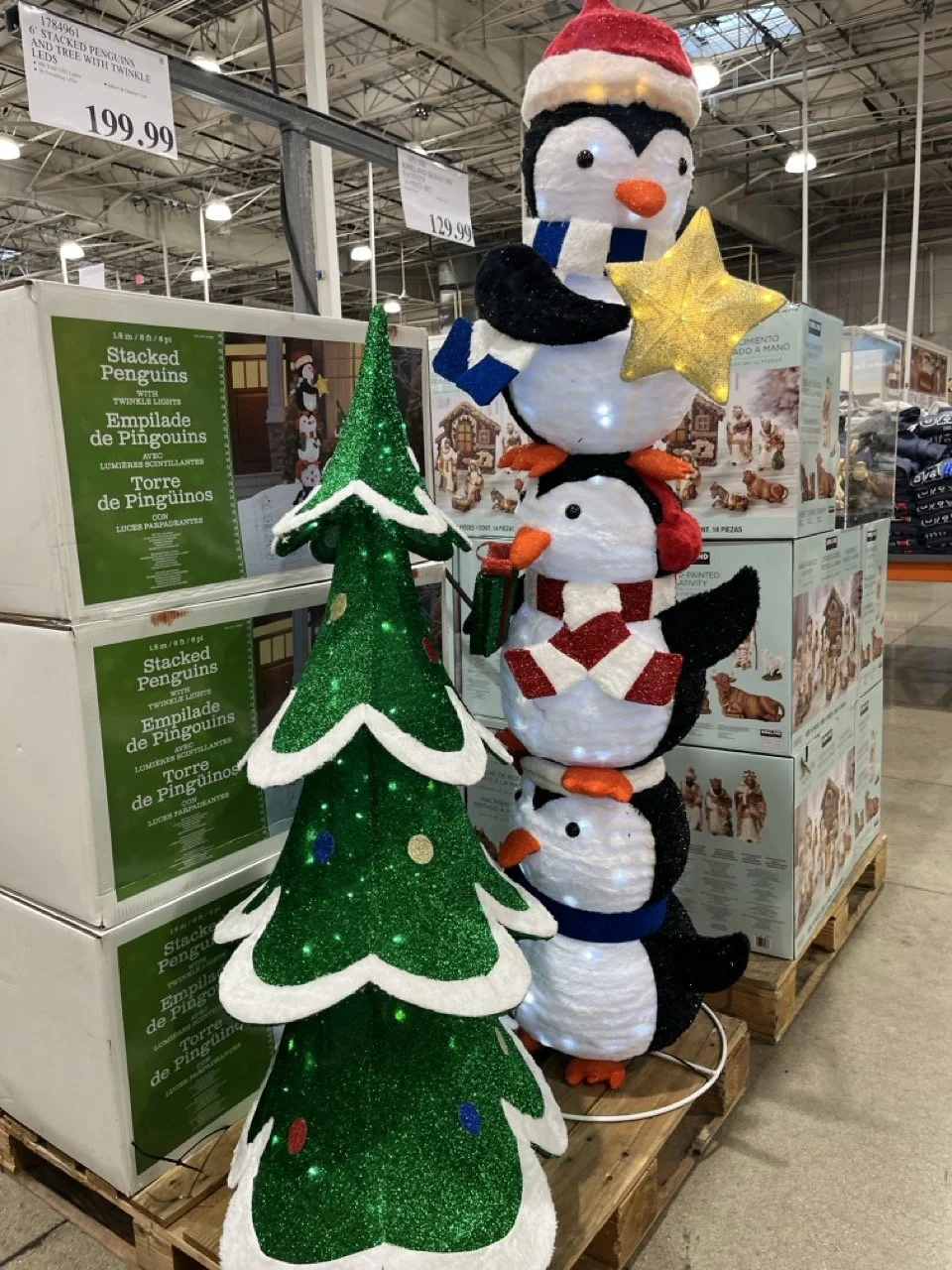
Pencils are back in this house.
Wednesday, September 24th
For decades I couldn’t stand pencils. Since I was a child. I hated that they were mandatory in school. The scratchy sound, the inevitable smudge on my hand, the shavings that got everywhere—it all made me cringe. And don’t even get me started on that awful moment when a pencil gets worn down to a nub and the wood rubs the paper instead of the lead. That sensation gave me goosebumps of disgust every single time. And things written in pencil always seemed tentative, as though you couldn’t make a decision. When people say “I’ll pencil you in for next Wednesday,” it’s not a sure thing.

But people grow and change. I picked one up at the office the other day and noticed that just as an object they’re really quite pleasing. Glossy and simple, one big piece. Gloriously analog. And honest. Wearing a No. 2 pencil down to three inches takes work, and either you’ve done that work or you haven’t. The marks are warmer than ink. And now that I’ve made decades’ worth of mistakes, that tentativeness I used to hate about them? I now find that charmingly forgiving—you can erase your mistakes, rework an idea, etc. At the same time nothing ever erases 100 percent so there’s a reminder of why you changed your mind along the way.
Now there are pencils in the kitchen drawer, on my desk, even tucked into a notebook by my bed. They’ve crept back into my house like old school friends, except none of them have gotten fat and they don’t get drunk and talk politics for four hours. I never thought I’d say this, but I actually enjoy reaching for a pencil these days. And like a lot of things from the ‘70s and ‘80s—such as wood-paneled station wagons, cassette tapes and Supertramp—I feel nostalgia and enthusiasm for them now even though I couldn’t stand them back then. Turns out this simple little thing I avoided so fervently for years has become one of the small, surprising pleasures of my daily routine.

Official Houston “I found a baby opossum” checklist
Tuesday, September 23rd
So my dogs have this toy opossum. They drag it all over the house, the yard, on road trips—they love this opossum. That’s why I didn’t realize at first that Oliver had brought an actual baby opossum into the living room. I stepped right over it on the way to get another beer just thinking it was a toy.
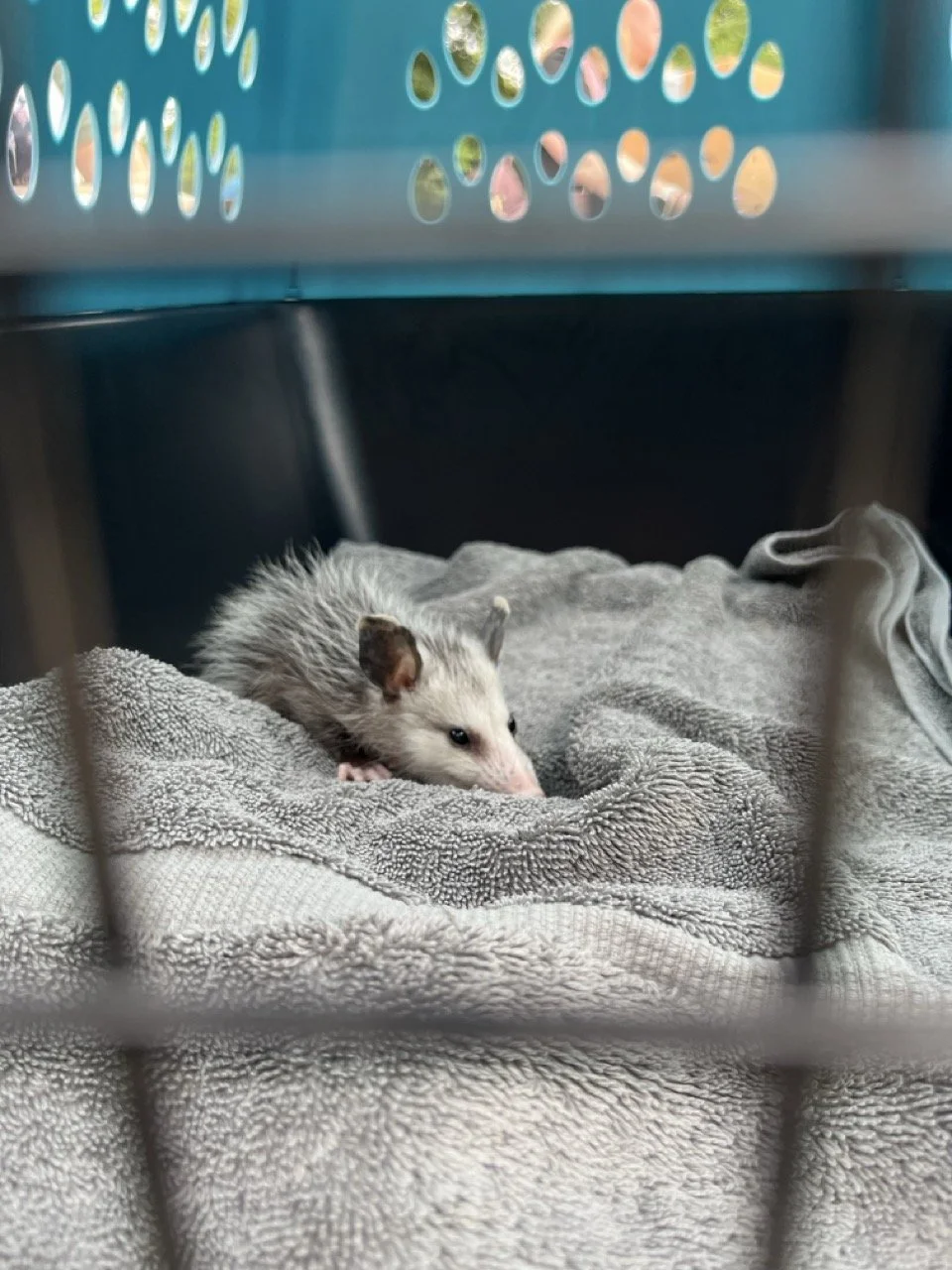
Like many places in the South we have a ton of opossums. We like having them in the yard because they eat bugs—they’re kind of like the night cleaning crew. I suspect we have more opossum traffic than most because we have a bunch of birdfeeders. Still, I had no idea what to do with a baby opossum. But here’s what I learned.
If it’s longer than seven inches, not counting the tail, just let it go, it’s fine.
Don’t just automatically scoop it up because the mom might be around.
If the mom isn’t around, she isn’t going to be around—they don’t come back for the kids.
Don’t try to feed it; giving it the wrong kind of food or milk could kill the poor thing.
Put it in a well ventilated box with a soft cloth, and don’t let it get too hot or cold.
Take it to the Houston SPCA’s Wildlife Center at 7007 Old Katy Road.
Also, fun fact: they have a bunch of babies at once. We ended up finding three. Well, the dogs found three and brought them to us; no telling how many there actually were. Special thanks to the SPCA for giving them a place to go.
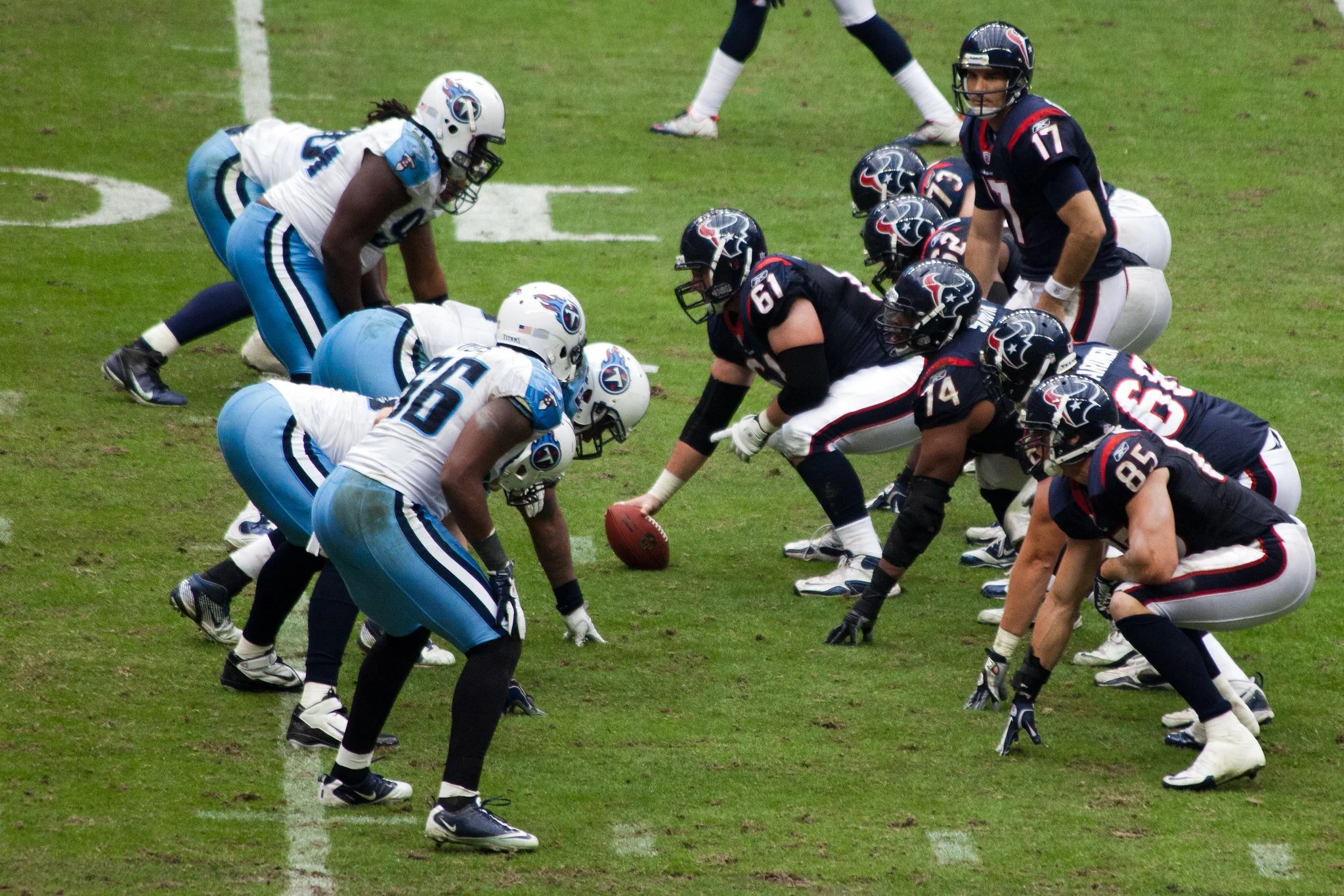
Man, same old story with the Houston Texans.
Monday, September 22nd
This is a town full of people who can hunt the depths of the Earth for oil and gas. We can put people on the moon. We can perform the world’s most advanced medical procedures. But we can’t make pass protection work. I heard during the Tampa Bay game, the Bucs’ D-Line didn’t just sack C.J. Stroud, they chased the poor guy out to his G-Wagon and wouldn’t let him leave. Oh, well, there’s always next year.

the Texas Tech University Red Raiders vs. the Coogs Oct 4th!
Sunday, September 21st
Texas Tech football doesn’t get much love in H-Town. I may see if I can grab some friends and hit TDECU stadium for our next big win, because Houston will be 100% West Texas next Saturday. The smack talk has already started. At HEB this afternoon, somebody stuck a big white sticker over my rear license plate. Remind me to pick up some tortillas.
I did a book signing here once
Saturday, September 20th
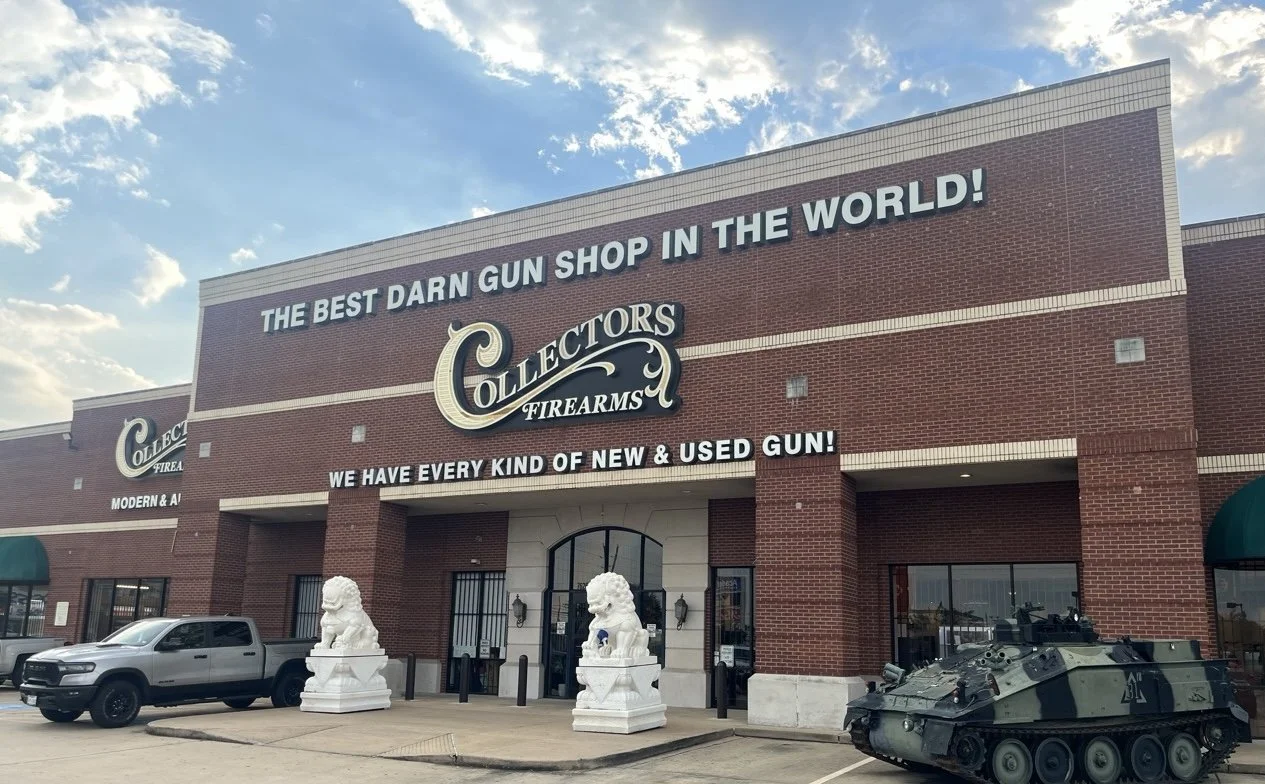
Of course, there wasn’t a tank parked out front. Back then it was a Barnes & Noble. I think it was for my first book back in 2006, Houston Then & Now (number 13, Lost Treasures of Houston) comes out for me in November). B&N bailed on the space and today it’s a huge gun store. Note: I would totally be willing to do another book event here in exchange for a Barrett Model 82A1.
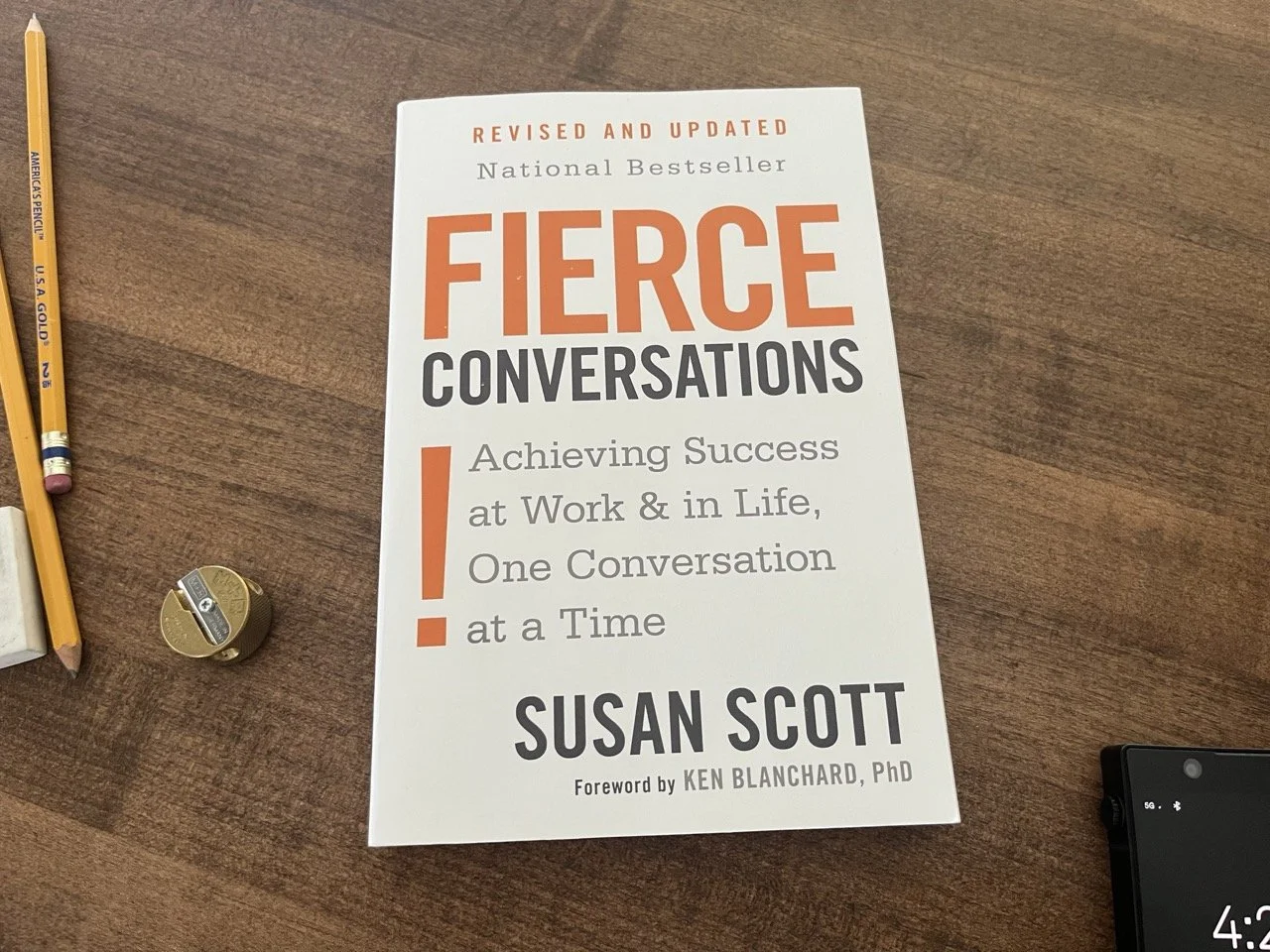
Great book on having difficult conversations.
Friday, September 19th
This book recommendation came up at work. But, of course, tough conversations are needed outside of the workplace too. And this is a good guide to making them work for you. It teaches you how to have the kind of honest, meaningful and productive conversations that can transform your relationships, workplace or life. If you’re the kind of person open to a self-help book this is a good one. When you think about it, the author posits, in a way the life you’re living right now is a function of all of the conversations you’ve had in the past. And your life five years from now will be determined by tomorrow’s tough conversations. It proves out, when you think about it. At least in my opinion.

Remember these?
Thursday, September 18th
A Key Map was Houston’s go-to spiral-bound street atlas, first published in 1957. Before GPS, Houstonians kept one in the car to navigate the city’s Byzantine tangle of freeways and neighborhoods, flipping page-by-page to locate addresses and landmarks. I’m old school; well, just old, really. So I still keep paper maps and atlases in the truck. Why? They never run out of battery, they won’t lose signal if you’re in the middle of nowhere and they help you maintain your navigation skills. Plus if you listen to your phone giving you directions all the time you never really learn your way around. I started once again really enjoying the challenge of trying to remember where to go on the move. It’s not for everyone but it works for me.
Of course Gallery Furniture has this in the parking lot.
Wednesday, September 17th

We went to replace our mattress and parked next to this thing. Typically I’d wonder why a furniture store has a tactical rescue vehicle. But this is Gallery Furniture. In this part of the world, they are a more reliable emergency infrastructure than many government entities. Between this place and Whataburger we are virtually a bulletproof community during hurricane season. Also, we got a super-comfortable mattress.
Almost the spooky season!
Tuesday, September 16th
We love Halloween. In fact, we typically watch a scary movie every night in October. This year we’re starting out two weeks early. I asked ChatGPT to provide a schedule and it’s pretty solid. Here’s what we have on deck:
Week 1: Foundations of Fear (classics and originals)
Ease into it with the movies that shaped the genre.
Psycho (1960)
Night of the Living Dead (1968)
The Exorcist (1973)
Halloween (1978)
The Shining (1980)
Poltergeist (1982)
A Nightmare on Elm Street (1984)
Week 2: Creature Features (monsters of all kinds)
From universal monsters to modern beasts.
Dracula (1931)
The Thing (1982)
An American Werewolf in London (1981)
The Fly (1986)
Tremors (1990)
The Descent (2005)
Cloverfield (2008)
Week 3: Found Footage Frights
Immersive, shaky-cam scares that feel “too real.”
Cannibal Holocaust (1980)
The Blair Witch Project (1999)
Paranormal Activity (2007)
REC (2007)
Lake Mungo (2008)
V/H/S (2012)
As Above, So Below (2014)
Week 4: Slashers & Survival
Knives, masks, and final girls.
Friday the 13th (1980)
Scream (1996)
I Know What You Did Last Summer (1997)
The Texas Chainsaw Massacre (1974)
You’re Next (2011)
Happy Death Day (2017)
Hush (2016)
Week 5: International Horrors
A trip around the globe for unique scares.
Ringu (Japan, 1998)
Ju-On: The Grudge (Japan, 2002)
Train to Busan (South Korea, 2016)
The Orphanage (Spain, 2007)
Raw (France, 2016)
Tigers Are Not Afraid (Mexico, 2017)
Under the Shadow (Iran/UK, 2016)
Week 6 (Halloween Week): Eurovibes
Classics from The Continent.
Suspiria (Italy, 1977)
Let the Right One In (Sweden, 2008)
The Orphanage (Spain, 2007)
The Wicker Man (UK, 1973)
REC (Spain, 2007)
Goodnight Mommy (2014)
Raw (2016)
Being a writer makes the mail super fun.
Monday, September 15th
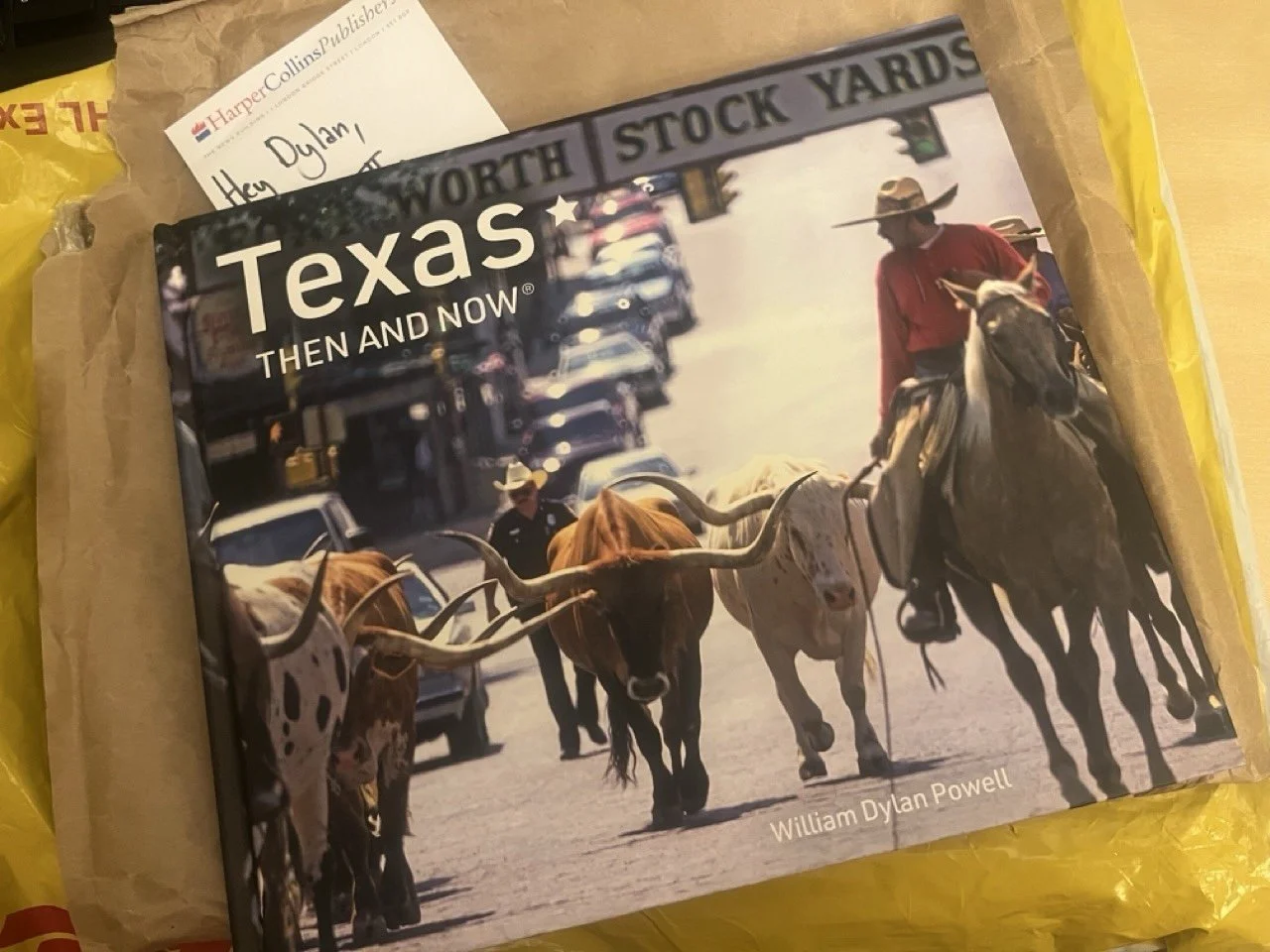
Check out what arrived today! The updated edition of Texas Then & Now I’ve been working on since earlier this year. It’s a fun update, and I’ve been thrilled that the book has sold so well. Big thanks to HarperCollins for letting me play again. Watch for it at your nearest Texas bookseller going into the new year.
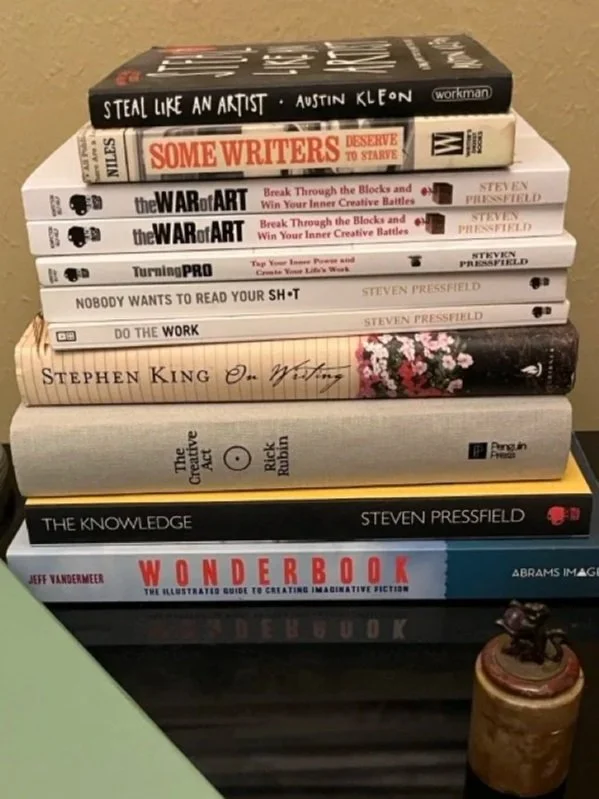
A few books on writing and creativity actually worth the time.
Sunday, September 14th
I just decluttered my office and damn it feels good. Along the way I got rid of dozens of books on writing and creativity. I hope other aspiring writers browsing the Half Price Books over by Whole Foods and Torchy’s Tacos off Kirkwood find inspiration in them. Not to sound unkind but I doubt they do. Frankly, most books on writing and creativity are nothing more than a money grab. I’ve been a professional writer for 25 years (for my sins). I’ve read more than a hundred books on the craft and business of writing. And I can count on two hands how many books on writing and creativity I found truly valuable over time. Here they are:
The War of Art by Steven Pressfield
Well, really anything by Steven Pressfield but especially this one. Pressfield calls out the “Resistance” in the universe–and inside us all–that doesn’t want us to accomplish our dreams. This guy is like the R. Lee Ermey of the creative world. If you buy only one of these books, buy this one. I have personally given away dozens of copies.
The Artist’s Way by Julia Cameron
The OG creativity ramp-up program. Morning pages, artist dates—if you’ve never tried it, it’s like a 12-week boot camp for creatives. Great for early career writers or mid-career folks in a rut.
Bird by Bird: Some Instructions on Writing and on Life by Anne Lamott
Lamott writes with humor and honesty about the messy, imperfect process of writing. Her idea of the “shitty first draft” is liberating; it gives permission to simply begin without the pressure of perfection. This book is a favorite of mine because it speaks to both the craft of writing and the emotional life of a writer.
Big Magic by Elizabeth Gilbert
Gilbert argues that ideas themselves want to be expressed, and our job is simply to cooperate with them. I love this book because it removes the weight of fear and expectation. Whenever the work starts to feel like drudgery, Big Magic reminds me to approach it with curiosity and just have fun with it.
Steal Like an Artist by Austin Kleon
This book explores how creativity is built from influence, remixing, and personal perspective. It’s a favorite because of its clarity and accessibility—you can flip it open to any page and find something that makes you want to start. Kleon makes the act of creating feel doable and energizing, especially when you’re tempted to overcomplicate things.
On Writing: A Memoir of the Craft by Stephen King
Part memoir, part craft book, King’s guide is beautiful because of its directness, practicality and lack of pretentiousness. He shares the lessons he’s learned over decades at the desk as one of the most popular writers of my lifetime, but also the story of how writing has shaped his life. It reminds me that writing is both an art and a discipline, that persistence matters as much as talent and that we all need to get over ourselves and put in the work.
The Creative Act: A Way of Being by Rick Rubin
This book was a nice surprise; I’ve given away dozens of these too. Rubin approaches creativity as a mindset rather than a method. His reflections on the creative process are remarkably actionable both in literary writing and in commercial copywriting and creative direction. It’s a thought-provoking guide for living creatively, whatever your discipline.
Wonderbook by Jeff VanderMeer
This book is just a super-fun work of art. VanderMeer’s Wonderbook is visually rich, strange, and packed with unconventional exercises. It’s a favorite because it challenges me to think differently about storytelling structure, imagination, and even the physical act of writing. Plus, it just has such wonderful illustrations.
Some Writers Deserve to Starve: 31 Brutal Truths About the Publishing Industry by Elaura Niles
Niles delivers practical, no-nonsense advice about the business side of writing. She highlights the habits and blind spots that prevent writers from succeeding. This book earns a permanent spot on my list because it cuts through romantic myths about writing and forces me to confront the professional realities of craft and business. You may not want to hear some of these truths, but it doesn’t make them less true.
My 100% authentic morning routine for “optimum writing”
Saturday, September 13th
I’ve heard these motivational-type folks talk about their morning routines full of meditation and gratitude journals and swimming laps and impossibly healthy Shrek-green smoothies full of antioxidants and smugness. When I tell people that I get up at 4:30 a.m. every day, that’s a lot of times what they picture my mornings are like. LOL, no. In reality, this is the actual experience of my super-motivational morning routine for optimum writing:

11:08 p.m.
Gunshots because Houston. Not morning yet, but I’ve been asleep for three hours so it feels like it. Realize I fell asleep mid-spy novel. A page is suction-cupped to my cheek. My glasses have Poltergeisted into another dimension. Possibly the same one where single socks go. Decide not to return fire.
1:15 a.m.
Ollie sees an opossum tightrope-walking the fence and lets the entire neighborhood know. Bertie joins in because teamwork. My wife bolts upright and yells at both of them, all of which sets off the neighbor's dogs and keeps the canine karmic cycle going. Find glasses by stepping on them, shuffle to the bathroom.
4:28 a.m.
Wake up two minutes before my alarm because apparently some universal force thinks it’s funny. Body feels like it’s been stored overnight in the glove box of a Mustang II. I badly want to roll over and go back to sleep but I usually don’t.
4:30 a.m.
Coffee. The only plot device I trust.
4:41 a.m.
Sit at desk. Realize I didn’t prep for the morning writing session last night like “successful writers” on podcasts insist you should. Spend 10 minutes trying to remember what I’m even writing. Spend 15 minutes wondering why. Briefly consider going back to bartending.
4:49 a.m.
Stop staring at blank page. Open Twitter to drop a #5amwritersclub post that says “Writing!” which is ironic because I’m not. I am on Twitter. X. Whatever.
4:50 a.m.
Glance at bookshelf. Notice yet another book I bought and never read. Crack it open. Get 17 pages in. Yay, I am now a reader instead of a writer.
5:05 a.m.
Finally open the Word doc I should have opened at 4:41. Blank page glares at me like an ex at a cocktail party. We stare at each other in silence.
5:06 a.m.
Dog farts, absconds from room like a WWII saboteur.
5:07–6:15 a.m.
White-hot writing heat. My mechanical keyboard clicks and clacks like a 19th-century steam engine. I machine gun 15 pages of crisp, compelling prose; I actually impress myself. I might concept six new story ideas; I see into the past, present and future simultaneously. For a brief, fading moment I actually think that I have talent. God I love this country.
6:16 a.m.
Sharp pain in my back from hunching over the last hour or so. Realize that my phone is dead. Run out to my truck for a charging cord. Lose keys.
6:17 a.m.
Wife wakes up. I scramble eggs for her because she deserves that kind of concierge service, and because I probably did something stupid that will come up later. Dogs get their artisanal chicken, peas, carrots, and rice. If I don’t feed them something nice like that they’ll try to eat the opossum outside.
6:24 a.m.
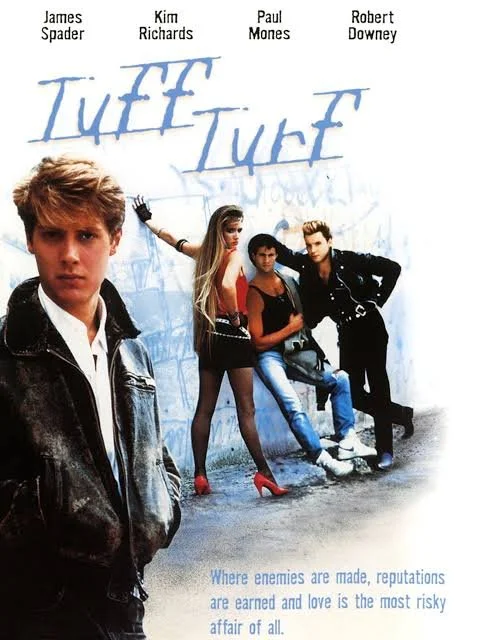
Make myself an omelet or waffles or both. Get distracted by a VHS-quality 1980s movie containing more mustaches than plot. Dogs circle my plate like one of the leather-jacketed street punks in the movie.
7:32 a.m.
Remember I have a job and actually like it. Get dressed. Find keys in the refrigerator or a potted plant or some other weird place. Sprint out the door with mismatched socks, a dog hair-covered Polo shirt, and a Buc-ees travel mug with a leaky lid. Close eyes while the truck warms up. Honking and screaming of merry Houston commuters wakes me up and I merge onto Briar Forest traffic like a fucking boss.
Inspirational? No. But advice you can use as a professional writer? Also no. Good content? Absolutely not. But at least the dogs eat well and I did manage to find my keys.
The HMNS Hall of Ancient Egypt
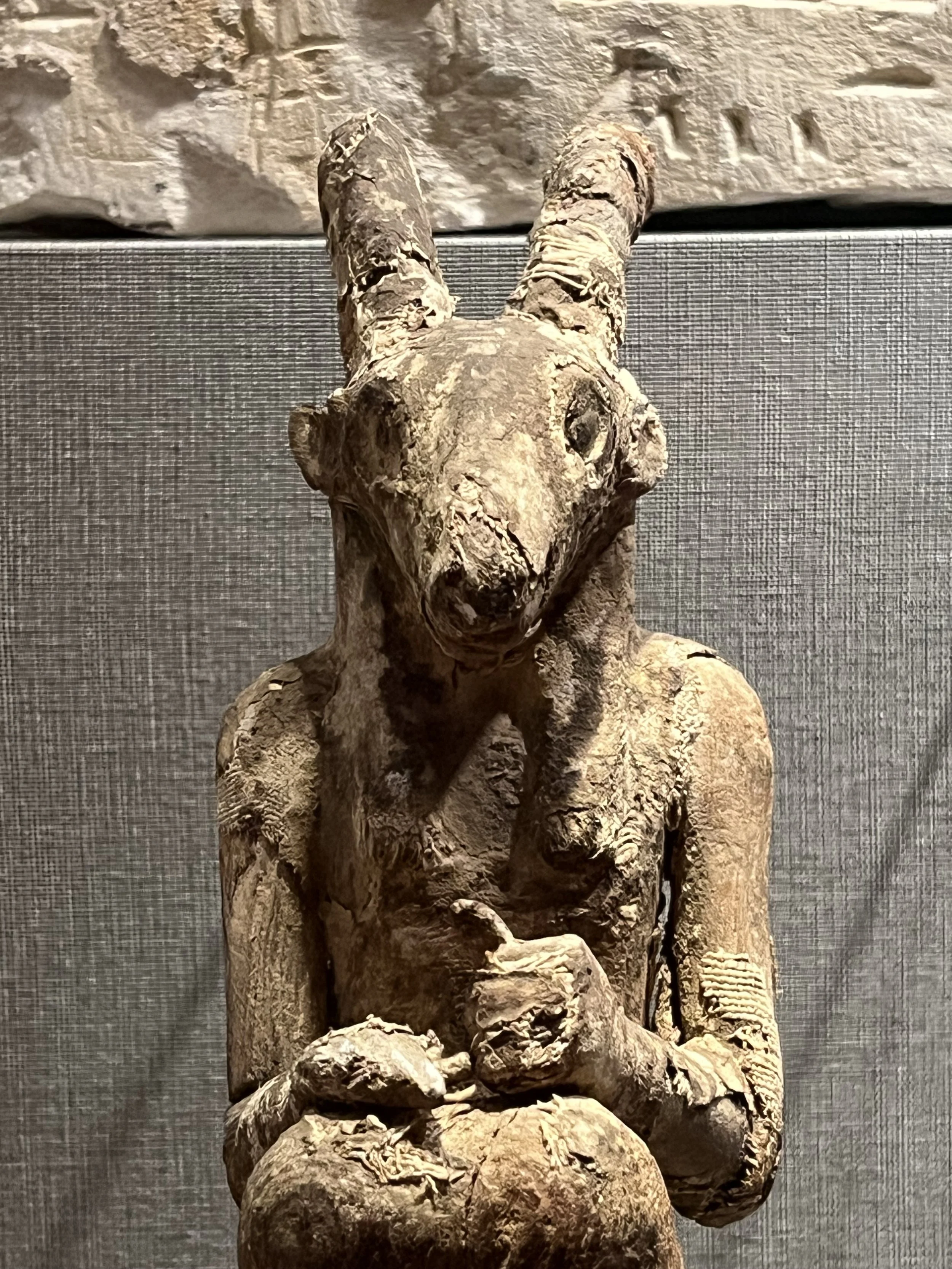
Gazelle-headed underworld demon. Wood, fabric, plaster and paint. New Kingdom, Dynasties 18–20 (1570–1070), perhaps from the Valley of the Kings. At the HMNS on loan from the trustees of the Denys Bower Bequest Chiddingstone Castle, UK.
Friday, September 12th
The Houston Museum of Natural Science is always showcasing some new cool, limited-time exhibit. So it’s easy to forget about all of the amazing permanent collections on display. I think the coolest is its 10,000-square-foot Hall of Ancient Egypt. Apache Corporation helps sponsor the exhibit.
When I was a kid we had these things called libraries and you’d put your kids there hoping they’d be more literate and couldn’t get into too much trouble. It almost worked with me, anyway.
I was always checking out books on ancient Egypt and the Bermuda Triangle and UFOs and all kinds of crazy stuff. And I never really grew out of my love of that sort of thing. So every time I’m at the HMNS for whatever reason I always slide by the Egyptian exhibit.
So last time I was there was to see the Death by Natural Causes experience, which I saw three times—highly recommended. And I couldn’t help but dive into the Egyptian death artifacts.
Among other things, the exhibit sports all kinds of pieces surrounding death rituals and religion: amulets, canopic jars, etc. Check out this bit of nightmare fuel depicting a gazelle. Sleep tight.
Arbor Oaks: Where Floods Took the Houses and Strays Took the Streets
Thursday, September 11th
Yesterday I dipped over to an abandoned neighborhood. Arbor Oaks was a quiet, middle class 'hood sort of North of Oak Forest built in the late 1970s—full of ranch-style homes and big, beautiful oak trees. It’s a pretty area. But like a lot of Houston, every once in a while nearby waterways reach out and try to kill you in your sleep. This place is right by where White Oak Bayou and Vogel Creek come together. It flooded. Then it flooded again. And again.
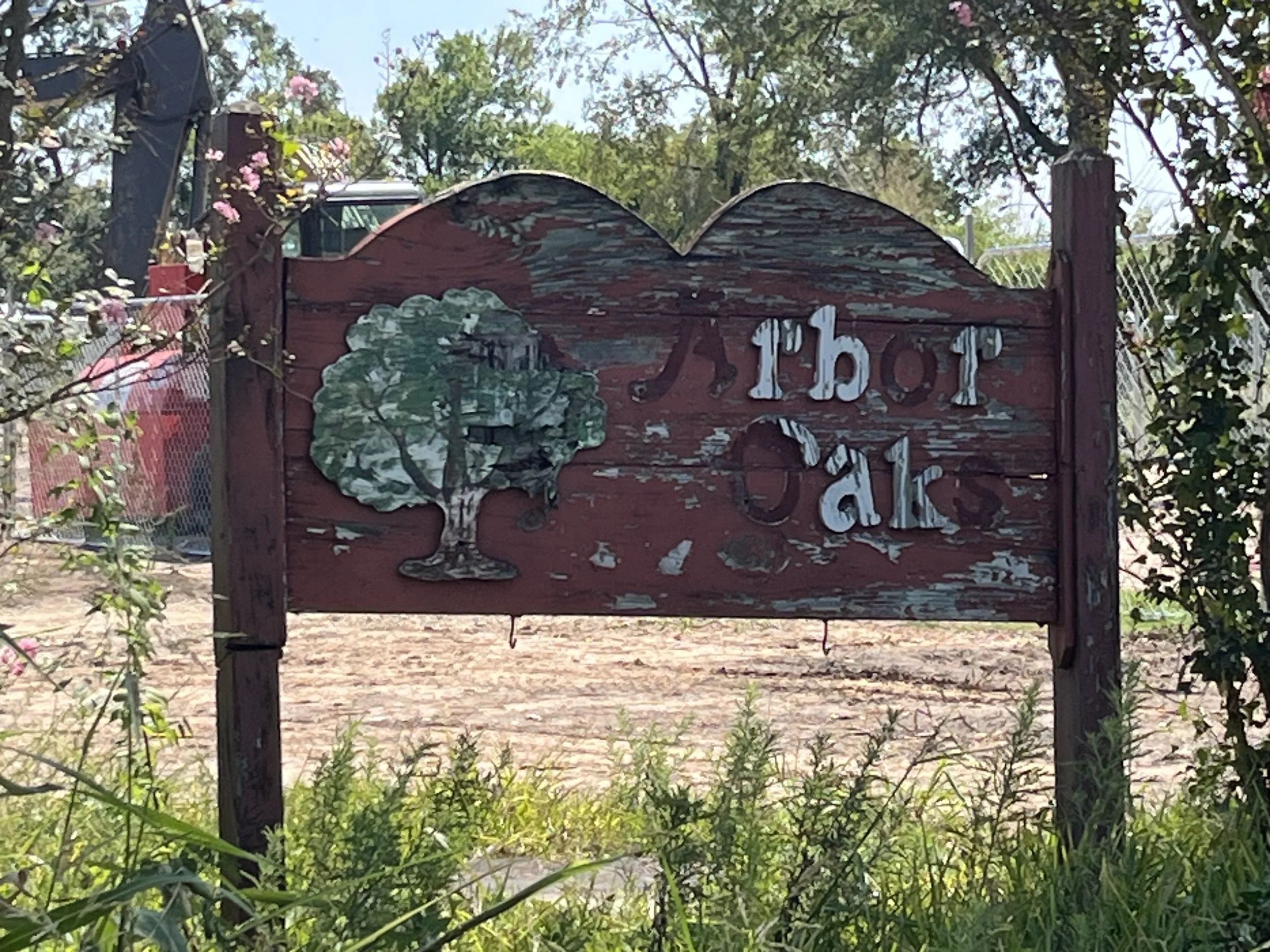
By the time Hurricane Harvey hit there were only a dozen or so houses left in Arbor Oaks. Guess what? Yep. They all flooded. Today it still has roads and trees and the odd holdout on the edge of the property but no houses in the neighborhood itself. It looks like somebody's trying to do something to the land because there's a trailer and some earthmoving equipment. I hear it’s supposed to be a detention basin. I feel like no matter what you wanted to do with that land, it would probably end up a detention basin.
I went and took some photos of Arbor Oaks for my upcoming book Lost Treasures of Houston. It's not a super rough area, but like the rest of town you don't leave nice things in your vehicle. At one point, I glanced back to check on my truck and noticed four wild dogs had started following me. I guess big spaces like this don’t stay empty, and nature moves in fast.
As I went about my business, the dogs started circling. One was a smallish Doberman, the others a squat pit bull and a couple of 50-pound-ish lab mixes that looked as though they'd never seen a shampoo bottle. I'm not saying they looked rough, but one of them had a wallet on a chain and black Dr. Martens with red laces.
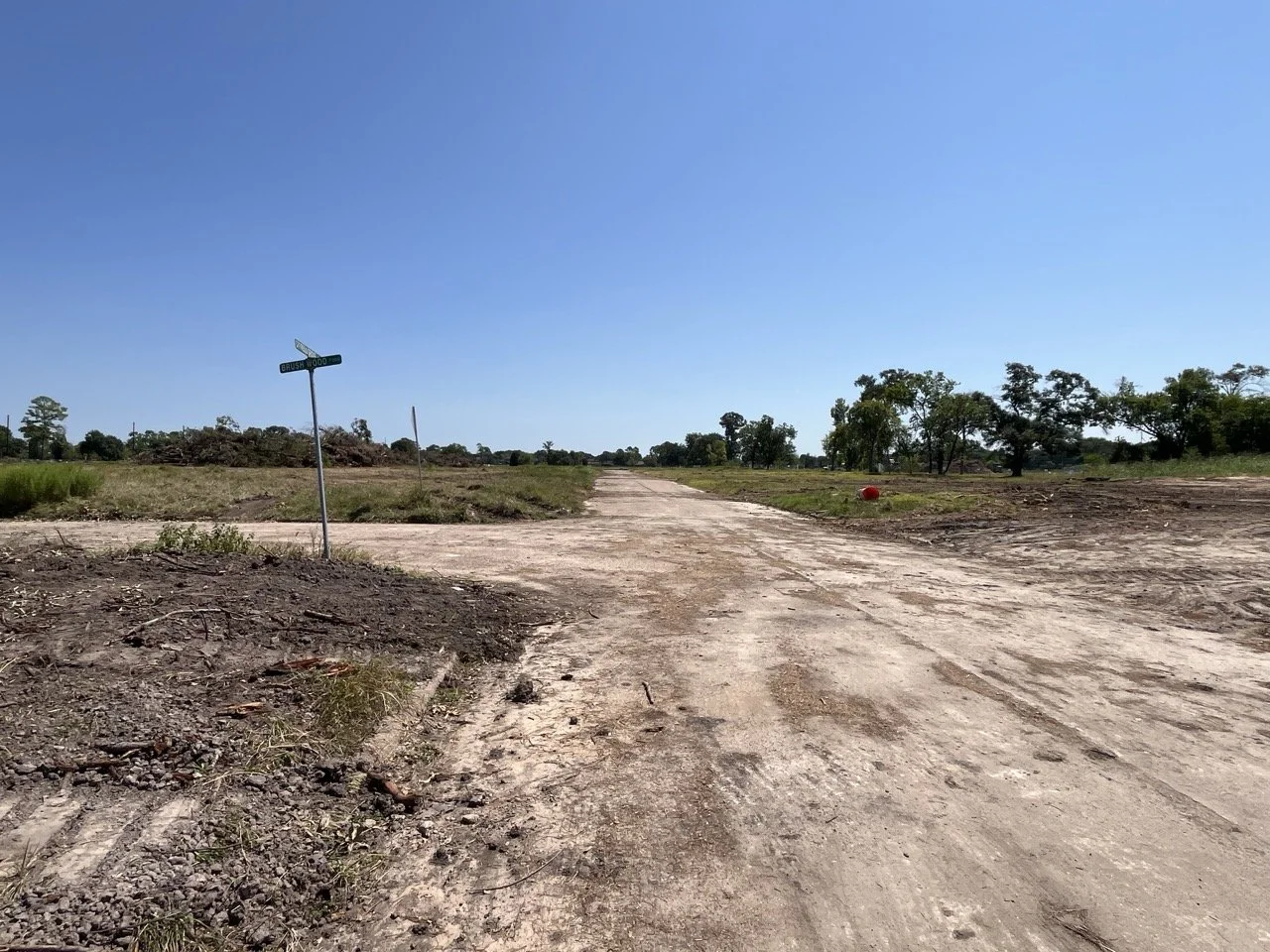
When I'd shot everything I wanted, which didn't take long because it's abandoned land, they'd moved between me and my truck. Not having any food to share, and smelling vaguely of the Buffalo chicken sammich I'd eaten on the drive over, I decided my best move was to employ a critical street skill that's served me well in the corporate world and been handed down in my family for generations: entitlement.
I walked directly toward the largest dog as though I were about to put him to work on a sled team. I didn't stare them down, but I did make a point to look each of them in the eyes briefly on the way there. They looked at each other as if to say "What's this guy's deal?" and scooted to the side of the road. One of them growled but immediately laid on his side for a noontime nap, which not only wasn't very intimidating but also made me realize I could use a nap myself.
So if you buy the book and see my (honestly kind of underwhelming) shots of a big dirt patch somewhere off of Antoine, forgive any blurriness. I was trying to get back to the truck without becoming a giant Milk Bone. “Become a writer,” they said. “It’s such a romantic lifestyle,” they said.
Aw, yeah, it’s that time, y’all!
Wednesday, September 10th
I love college football season. With the weather cooling and the holidays coming this is just my favorite time of year anyway, but college ball is the cherry on top. I don’t know, specifically, why it’s so fun. There’s the sense of regional pride, identity and culture. There are the fun rituals and rivalries. There’s the total unpredictability of football at that level. There’s the social aspect with watch parties and giving your friends a hard time about their teams. Even though my alma mater is stuck in a conference that resembles The Island of Misfit Toys, we’ve already had a lot of fun watching the tortillas fly.
To ramp up, I even read a few books on the subject which I thought I’d share. If you like college ball too you might find these worth your while:
Friday Night Lights: A Town, a Team, and a Dream by H. G. Bissinger
OK, this isn’t college but I’d put Odessa Permian against Oklahoma State any day. You might know the movie with Billy Bob Thornton or the TV series with Kyle Chandler (wasn’t he perfectly cast for that?) but this was the book that started it all. Centered around a high-school team out in Odessa, the book captures the heart of Texas and Southern football culture through the 1988 Permian Panthers’ season. It goes beyond the game, exploring societal issues, small-town identity and coming-of-age trials. A true classic of sports literature.
Do yourself a favor and add the photo book: Friday Night Lives to your cart as you buy. Robert Clark did the photos for Bissinger’s book and these were the best photos that didn’t make the cut—and they’re incredible.
The Junction Boys by Jim Dent
I was also extra excited to read this just because my wife and I stop at Junction, Texas every year on our weeklong pilgrimage to Big Bend. We always grab a steak at the Isaack Restaurant when we pull into town. Anyhoo I’d never heard of this event but I’ll bet most Aggies have because really this is a Texas A&M story. I like Aggies. They’re good people. Don’t get me started about that bunch in Austin.
In 1954, the Aggies were struggling. They’d gone 1-9 and had just hired Paul “Bear” Bryant to whip the team into shape. He wanted to set a new tone of discipline and achievement in the program—holding a 10-day preseason camp in Junction. The message was clear: going forward there is a new standard for football at Texas A&M University. And that meant new standards of what would be expected of the young men who wanted a place on the team.
Only a fraction of players survived. Well, they all survived, but many didn’t make it through the rigorous program in the Texas heat. Lots of drama, lots of grit. And at the end of the day a pretty poignant take on leadership and sacrifice. Recommended guy reading in general. Fox Sports’ Pat Summerall said it was: “…the best sports book I’ve ever read.”
Dave Campbell's Favorite Texas College Football Stories by Dave Campbell
Do they still publish Dave Campbell’s Texas Football magazine anymore? It used to be everywhere like the grocery store and gas stations and every bookstore. Maybe it still is but these days I do that thing where you just pull up to HEB and they load your groceries in the truck; I fill up at COSTCO. And whenever I’m at a bookstore I never seem to make it to the magazines anymore.
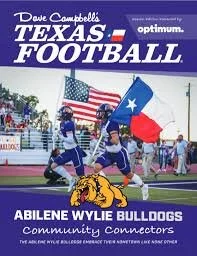
But this book, which came out in 2019, is a sort of curated collection from Campbell’s beloved “Bible of Texas Football,” delving into memorable moments and figures as told by one of its most respected voices. If you liked the magazine, you’ll love this—especially if you were a fan of the Southwest Conference. Those were the days, huh? Back when conferences made sense and you had to at least put on the pretense that you didn’t just give your star Wide Receiver a yellow Lambo.
Campbell passed in 2021 so it’s awesome he got to see this book come out and thrive. Like all great creators, he started Texas Football because he was often disappointed he couldn’t find what he wanted. Specifically, the way Texas football was covered from a journalistic perspective. Campbell went to Baylor and became sports editor of the Waco Tribune-Herald, eventually launching the magazine in 1960. He produced it on his kitchen table. This book is a wonderful tribute to his legacy, and the legacy of Texas football.
Update: Magazine is still going!
Double T Double Cross by Michael Lee Lanning
Aw, man, I’m way too close to this one. Like a lot of people, I have strong opinions on the university’s treatment of Mike Leach. This book investigates the controversial dismissal of The Pirate, then head coach of Texas Tech, just before the 2010 Alamo Bowl. Lanning scrutinizes the internal politics, alleged “backroom deals,” and the institutional maneuvering that led to Leach’s firing, revealing how this event shook the Red Raider Nation. These sleazy admins basically nuked our program, making it untouchable for years and ensuring that we’d stay second-tier in the immediate future. Joey McGuire is great, and Cody Campbell has been an absolute savior, but every Tech alum I know is still furious about this episode and feels as though we never got true satisfaction or accountability from the school or from certain families involved.
The Origins of Southern College Football by Andrew McIlwaine Bell
I really enjoyed this book, especially since it’s not the kind of thing I typically read. It explores how college football took root in the South after the War Between the States—adopted from northern "scientific" football by Southerners educated in Ivy League schools. It skillfully ties the sport’s growth to the region’s social upheaval and cultural reinvention, blending deep research with engaging storytelling.
I do enjoy the odd book about Southern culture, though, especially as my family—and this isn’t true of all Texans—identify as Southerners. They say Texas isn’t the South; that it’s its own thing. And I agree. But East Texas, behind the pine curtain where my father’s family is from, is 100 percent a part of the South. And so was Houston before its steroid years, though many are loath to admit it.
The book is an academically rigorous piece of research, but he keeps it interesting. Also, his beard game is strong. There’s a great quote he kicks off with by a player called William “Pudge” Heffelfinger: “Southern football players play with a reckless abandon, a wild fanaticism that’s rarely found in players from other parts of the nation.” Truth.
Fall Podcast Roundup
Tuesday, September 9th
If I’m not listening to an audiobook, I have a podcast going when I’m driving in the truck by myself, doing work around the house, messing around in the yard or walking the dogs. My problem is there are more fun podcasts than I have time to listen to them. And I’m always curious as to what everyone else is tapping into. Here are a few favorites I try to keep up with:
The President's Daily Brief
Not only do I not have time to read or watch the news in an in-depth manner, but I also tend to scream and throw things around the room when I do. So I try not to do much of that. But I feel like I should stay sort of in touch with what's going on in the world, and this quick daily news digest is typically about all of the news I can stand.
The Creative Penn Podcast
Hosted by Joanna Penn, this show dives into writing, self‑publishing, book marketing, and earning a living as a writer. Even though I'm not an indie writer, I especially appreciate her insights on the business and marketing side of the writing business. Because let's face it, we're all on our own these days.
Grammar Girl: Quick and Dirty Tips for Better Writing
A quick listen with cutesy insights on grammar, style, and usage—ideal for anyone aiming to polish their prose. Great for the word nerd in you. I think my favorite segment is "familects," words people use within this family that they share with the show. We have a familect in our family. Every time someone gives you the finger on the highway, we say they just gave you a big ol' "Houston Howdy." Because while people in Texas tend to drive friendly, people in Houston, Texas do not.
The James Altucher Show
This guy is awesome. His show interviews high achievers in all fields. He's an interesting, likable host whose guests have cool stories with actionable advice to offer folks from any walk of life. Also he and his guests, for the most part, are just inherently bright people and that's refreshing in a world of TikTok brain rot and censored mainstream pablum. I still do his 10 ideas a day, but have to admit that over the last week I'm averaging five or six.
Locked On Podcast Network
Some writers don’t do sports—especially the boujee lit mag crowd who can’t enjoy simple things without cynical irony and roll their eyes at traditional Americana. For the rest of us, check out the Locked On Podcast Network. This media network, started by, and I love this, David Locke, offers pretty darn good daily team-focused podcasts, league-wide shows, fantasy and more. I follow the Locked On shows for Texas Tech Football, the Houston Texans and the Big XII (such as it is). I miss the days of the Southwest Conference. I feel like what makes Locked On content work is that it’s composed of short, frequent shows with a narrow focus and quality production.
The Read Well Podcast
While lots of podcasts focus on writing, very few are about reading—that’s why I like this weekly podcast by Eddy Hood. Dedicated to cultivating awesome reading habits, enhancing research strategies and exploring big ideas through books, his position is that people have made reading a chore or a game— obsessing over the number of books we’ve read or ticking them off a checklist like Clark Griswold in National Lampoon’s European Vacation. With a focus on reading slowly, taking effective notes, and applying insights, the podcast helps listeners engage deeply with works—from Plato’s wisdom to Dostoevsky’s narratives—using tools like Zettelkasten. As the host always says: “Read slowly. Take notes. Apply the ideas.”
So I bought a “dumb phone”
Monday, September 8th
It’s just what it sounds like—a phone that costs $700 but doesn’t really do much. No apps. Think about that; no banking, no social media, no YouTube or Spotify. No Office 365 or Microsoft Teams. It lets me call people, send texts, listen to podcasts and set up a hotspot. That’s about it.

The reason it appealed to me was because I was a bit like a schoolgirl with my iPhone, just glued to it all the time for some reason or another. Sure, I could’ve just removed the apps but I didn’t really have the discipline for that I’ll admit. I just added them back. All this personal tech was stressing me out and I felt like I needed to put some guardrails around my digital behavior.
This was a bit of an experiment and I have to say one month in it’s pretty awesome. I had my truck washed the other day and sat down to read The Best Mystery Stories of the Year, 2024 edition while I waited. (“The Last Day at the Jack Rabbit” by John M. Floyd was a lot of fun.) Everyone else was staring at their phone arguing about Communism with strangers on Reddit or watching weird TikTok trends or getting mad about some current event or social issue. I don’t miss any of that, really.
I read more now in the evening. My sleep has improved. I place actual phone calls more often, which is fun because it horrifies some people. I’ve even started writing longhand letters to friends and family again. Fun fact: People LOVE getting stuff in the mail that’s not a bill. I feel like I’m moving backwards in time, but also like I’ve retaken control over my life. I’m a lot less stressed these days.
Two weeks in, though, I have to admit it was a rough start. The first day I had the phone I drove to a company event with a colleague and you needed to scan a QR code to park. My phone is too dumb for QR codes. I still needed to move money around, wanted to listen to audiobooks and needed to check my Amex statement. Couldn’t do any of that.
At first I felt twitchy. Standing in line for a sammich at Central Market I kept reaching for my phone. What do people do in line without a phone? Just f’g sit there? Since all my apps still worked on WiFi I kept my iPhone in my backpack and pulled it out to access my banking or check the weather or buy something on Amazon. So for two or three weeks I carried around two phones, and it was starting to feel ridiculous.
But it turned out that was just an awkward transition period. All of the things I thought I needed the smart phone for, after a few weeks, I realized weren’t that important or urgent. I’m a professional writer and creative director. Most days nobody needs me at 9pm on a Tuesday, and if they do they can call me. I’ve changed my habits for the better. Now I keep my smartphone at home in a drawer and I’m a free man.
There’s a phrase for this, which I didn’t know previously because I’m kind of old, ”Digital Minimalism.” Which just basically means living like I have done most of my adult life until the iPhone and social media turned me into a carbon-based data product. It’s sort of a movement where people try to use technology in a way that emphasizes focus, intentionality and alignment with personal values. The idea is that you limit online time to a small set of carefully chosen, optimized activities that support what matters most to you—and chuck out all the rest.
There are a bunch of “dumb phones” and I feel like any of them will let you pare back your tech use if you’re easily tech-stressed like me. I have the Light Phone III, which I got a deal on as an early buyer; it was on backorder for more than a year. I chose this one, honestly, because it looks the coolest. It’s sort of a sleek little metal box. Light Phone II is still popular. There’s also the Nokia 3210 (2024), the Nokia 235 4G, the Nokia 2780 Flip, and the Punkt MP02. Each one lets you stay in touch while minimizing digital distractions. The Punkt one was kind of tempting too, actually.
Pro tip, though, if you think digital minimalism is for you. It’s not just about the phone. The first two weeks I used this phone, I kept up my same habits and just used my iPad, laptop and other devices to do the same things that were stressing me out with the iPhone. I really had to go back and audit what, specifically, gave me anxiety and what I really needed. I started scheduling specific times to use specific technologies.
I’m actually better at getting back with people now that I have less technology, though I realize that’s not intuitive. It feels good. Between this change and walking in the park by my house every evening, I feel like a new man. I just can’t easily brag about it on social media anymore.
SO MANY Book Lights
Sunday, September 7th
Man, I struggle with reading lights. Yes I acknowledge that if that’s all life has to annoy me things are running pretty smoothly. But it’s a thing. My living room is a little on the dim side, intentionally, because I’m not about sitting under intense lights after a long day in front of a computer screen. And when I read in bed each night I tend to turn off all the lights and just use a reading light so I don’t keep my wife up. So I’ve owned about every kind there is. I figure I can’t be the only one who’s always looking for something better or more convenient; so here are a few top picks of the year.
Glocusent Bendable Neck Light
True, Glocusent sounds like a nutritional supplement for joint health but in the world of Bizarre Made in China Amazon Brands that’s what you get. This is the one I’ve been using lately. It took a little getting used to, and I find myself playing with it a lot—jostling around like I’m trying to make hand puppets on the ceiling. But the beauty is you don’t have to mess with it when you’re turning pages or moving the book around. When the light clips directly to the book, I never really know the best place to put it and, with these things, you don’t have to worry about that issue.
Energizer Flex-R LED Rechargeable Book Light

I bought this one about six years ago and it’s still going strong. I like it because it’s relatively compact. Sometimes with lights designed like this it can feel like you’re waving around six-foot-long analog TV antennas from the 1970s trying to improve the quality of the picture for the football game. It also kind of looks like Nessie, so that’s cool.
ENERGIZER Rechargeable LED Book Light FLEX
This is kind of a basic bro book light. I’ve got four of these in various parts of the house, mostly hidden in drawers where I’ll never find them again. The thing I appreciate about these is that not only are they rechargeable but they also hold a charge for a long time. That came in super handy when we were out of power for a week during Hurricane Ike. And Harvey. And Beryl, come to think of it. During a prolonged power outage you figure out pretty quick that it’s easier to light a specific task you’re trying to do than light a whole room.
Konig & Meyer Music Stand Light with 2 LED FlexLights
I’ve got a few of these too and I have to say I don’t see the point of the two lights for a book light. I feel like I’m cradling a praying mantis every time I use these, though they are nice and bright. That said, I find these great for a number of things that don’t actually involve reading. This little thing is great for gun cleaning, clipping it on the side of the desk so my old eyes can see what’s what. And I have one in the truck for reading paper maps. It also did a pretty solid job when I wedged it in a jack-o-lantern two years ago, though this light is a little on the pricey end for that at $40-ish.
The Corndogs are thriving.
Saturday, September 6th
When our old dog, Scout, passed away, our other dog, Bertie, only two-years-old, was so sad. She just walked from room to room in our house looking for her old pal and it was the saddest thing ever. I didn’t really want to get another dog again because I was still kinda hurting too from losing Scout. We don’t have kids so we’re the kind of people whose dogs have ski jackets and health insurance.
I bought this one about six years ago and it’s still going strong. I like it because it’s relatively compact. Sometimes with lights designed like this it can feel like you’re waving around six-foot-long analog TV antennas from the 1970s trying to improve the quality of the picture for the football game. It also kind of looks like Nessie, so that’s cool.

Anyhoo, in an effort to help out poor Bertie, my wife got on the website of the adoption agency where we got her. That’s when she saw him. Bertie’s twin brother. Still up for adoption after two years in the shelter.
Turns out this adoption agency had Bertie’s whole litter at one point. My wife ran across them at the Urban Harvest farmer’s market. They had a booth and pulled the old: “Hey do us a favor and take this little puppy for a lap around the market for us.” And then we had a dog. But that was two years ago.
We had no idea our dog had a twin.

That whole two years we were making Bertie homemade breakfasts with organic chicken and doing road trips with her and walking her around the neighborhood—her brother was in a foster home in the country with 16 other dogs waiting to get adopted.
We emailed the agency, thinking maybe they just hadn’t updated their website or something. Nope, Bertie’s twin brother was still up for adoption two years later. They brought him over the following weekend. He was nervous being at our house, and also in the city with all its noise and chaos, so it’s hard to tell if they recognized each other. But they became pals right away.
Today the first thing they do when they get up in the morning is run around the house playing with each other. They sleep together, eat together, run around the yard together and snuffle side-by-side when we walk them around the neighborhood. They don’t like it one bit when separated. We’ve nicknamed them “The Corndogs.”

One of their favorite things to do is join me in my office when I’m writing. I prefer loud, clicky mechanical keyboards. So when I sit down at my desk around 4:30am and start writing for the day, they both jump onto my couch and let the clickity-clackity keyboard put them immediately to sleep. They’re like two snoring bookends drooling over each other and nothing makes them happier. Whether four in the morning or four in the afternoon, when I start typing they start sleeping.
The adoption place was PupSquad, by the way—can’t recommend them enough. For both dogs they actually came to my house before the adoption to inspect it. They walked my back yard. They asked for financial information. I’m pretty sure I could have adopted a Russian child with less paperwork. They’re in the office with me right now—the dogs, not the adoption agency; that would be overkill. In the time it’s taken me to type this little note the sound of me clicking away on this keyboard has put them both completely asleep.
So my neighborhood park has a bagpipe player.
Friday, September 5th
Went for an evening walk with my wife and the dude was just out there making the park awesome. All of the walkers and cyclists were enjoying it so much! Thanks, Pipey MacSongbird, whoever you are, for making our stroll a little bit more special. Hope to hear you out there again sometime.
Thank you, Austin!
Thursday, September 4th
My recent book signing in Austin was one of the most fun weekend roadtrips I’ve had in ages—and we’ve taken a lot of roadtrips. Hosted by Vintage Bookstore and Wine Bar, the event was a panel discussion about the recent anthology Sleuths Just Wanna Have Fun: Private Eyes In the Materialistic Eighties. Series creator and editor Michael Bracken was on hand, as were various and sundry contributors to the book including James A. Hearn, Laura Oles, Mark Thielman and yours truly. All hosted by legendary Austin bookseller and author Scott Montgomery.

The crowd started small but eventually swelled into a full house; wine flowed, people were super-engaged and we covered ‘80s topics ranging from Remington Steele to Reaganomics. I even got a few surprise visitors! My friend Gene, a very talented author of sci-fi, fantasy and a very interesting academic work on Superheroes, drove up from Houston and was nice enough to stop by with his sister and her husband. I also had a long-lost cousin from Louisiana swing by that I hadn’t seen for ages.

Before the signing we snuck over to Zilker Park for some sunshine and fresh air. My wife went for a run and took sort of a long, meandering waddle. Houstonians are spoiled for parks; my house is walking distance to Terry Hershey and of course they just redid Memorial including a PGA golf course. But I have to say Zilker was great. Most of the foot traffic was twentysomething UT kids chatting about their skibidi toilets or whatever. But around the trails people were doing all kinds of cool stuff like disc golf, softball, volleyball, hacky sack (speaking of the ‘80s) and several little picnics and parties. Probably the coolest thing I saw was a small group playing volleyball from their kayaks down in the water.
We also stayed at a super-cool hotel called the Hotel Van Zandt, whose name was inspired by Townes Van Zandt. The whole thing has a rustic, boutique music vibe with little guitar amps and turntables and guitar picks and such. They also had a class rooftop restaurant and bar. We decided to make it a short trip, though. These days I’m the kind of guy who needs an extra day of leisure on each end of a vacation just to sit around and chill before jumping back in the grind. Plus we boarded the dogs, which at the place we usually use might or might not have cost more per night than the Van Zandt. But the bookstore alone was worth the drive up there. Big thanks to the event planners for having me up!
